Ask a coach in an Egyptian club why the kids train in one shirt and play in another and the honest answer is usually about laundry, not performance. But the distinction is real, and once a child moves from school PE into club football, handball or basketball, the family starts buying two different things without anyone explaining the difference. This is the guide that explains it: what a training kit is built for, what a match kit is built for, how many of each you need, and where paying more actually buys something.
Everything here is written for the Egyptian season — September heat, a short cool window from December to February, and a long hot spring — and maps to the matching sports uniform sets and separates you can buy locally.
What Separates a Training Kit From a Match Kit
The short version: a training kit is bought to be destroyed, and a match kit is bought to look identical to nine other children for a whole season. Those two jobs pull the specification in opposite directions.
The Training Week and Why the Training Kit Wears Out First
A child in an Egyptian club trains two to four times a week and plays once a week, at most. That means the training shirt goes through the wash roughly three times for every one wash the match shirt gets. Over a nine-month season that is around 110 wash cycles against 30. This ratio is the single most important fact in the whole comparison, and it is why a training shirt should be chosen for durability first and appearance second, while a match shirt can be lighter and finer because it simply does not accumulate the same abuse.
Training also involves drills the match never does: sliding, bibs pulled over the head, sitting on concrete edges, wall passes against rough surfaces. The hem, the collar and the shoulder seams take all of it.
Club Rules, Numbers and Referee Checks on Match Day
On match day the kit has to satisfy someone other than the child. Numbers must be legible, the squad has to be visually uniform, and in most Egyptian youth leagues the referee will ask a player to change if the shirt colour clashes with the opposition or with the goalkeeper. That is why the match kit is bought as a set, in one colourway, with printing done once for the whole squad — and why nobody should be training in it. A faded number on a shirt that has been washed 100 times is a real problem at a tournament.
Training Kit Against Match Kit: The Full Comparison
This table is what parents most often ask for, so here it is in one place.
| Criterion | Training kit | Match kit |
|---|---|---|
| Times used per week | Two to four | Once, sometimes twice in tournament weeks |
| Fabric weight | Medium to heavy knit, 150–180 gsm | Light knit, 120–150 gsm |
| Priority | Surviving wash cycles and abrasion | Looking uniform and staying cool at full pace |
| Printing | None, or a simple club mark | Number, name, sponsor, done once for the squad |
| Colour | Dark or patterned, hides marks | Club colours, exact match across the squad |
| Fit | A touch roomier, layers over a base shirt | Closer, less fabric for an opponent to grab |
| How many to own | Two to three shirts, two shorts | One set, plus the spare the club holds |
| Replacement cycle | Every season, sometimes mid-season | Every two seasons, or when the child outgrows it |
| Where to spend | Shorts and collar quality | Print quality and colour accuracy |
Read the last two rows together and the buying logic falls out on its own: buy training pieces often and cheaply from a wide sports t-shirts range, and buy the match set once and properly.
Fabric and Construction Differences Between Training and Match Jerseys
Two shirts can both say polyester on the label and behave completely differently on a Cairo pitch in April.
Heavier Training Knit Against Lightweight Match Knit
A training shirt in the 150 to 180 gsm range has more yarn per square metre, which means more to abrade before a hole appears, and a collar that holds its shape after dozens of washes. A match shirt in the 120 to 150 gsm range is noticeably cooler at full sprint and dries faster at half time, but its collar deforms much sooner under repeated washing. Neither is better; they are optimised for different jobs. A practical option such as the boys long sleeve performance t-shirt is a good example of a heavier training piece that also doubles as a winter layer.
Seams, Collars and the Cost of Washing Three Times a Week
Look at three details before buying a training shirt. First, the collar: a ribbed or bound collar survives, a raw single-stitched neckline curls within a month. Second, shoulder seams: a seam set slightly inward from the shoulder point takes less bag-strap friction. Third, the hem: a double-needle hem holds, a single line of stitching unravels at the side split. On a match shirt these matter less, simply because it gets washed a third as often.
On printing, screen print and good-quality heat transfer both last if the shirt is turned inside out, washed at 30°C and dried in shade. What kills print in Egypt is the balcony in July — direct sun fades a number faster than any number of wash cycles.
Shorts, Socks and Base Layers Across Training and Match Day
The shirt gets all the attention, but the shorts are where kits actually fail.
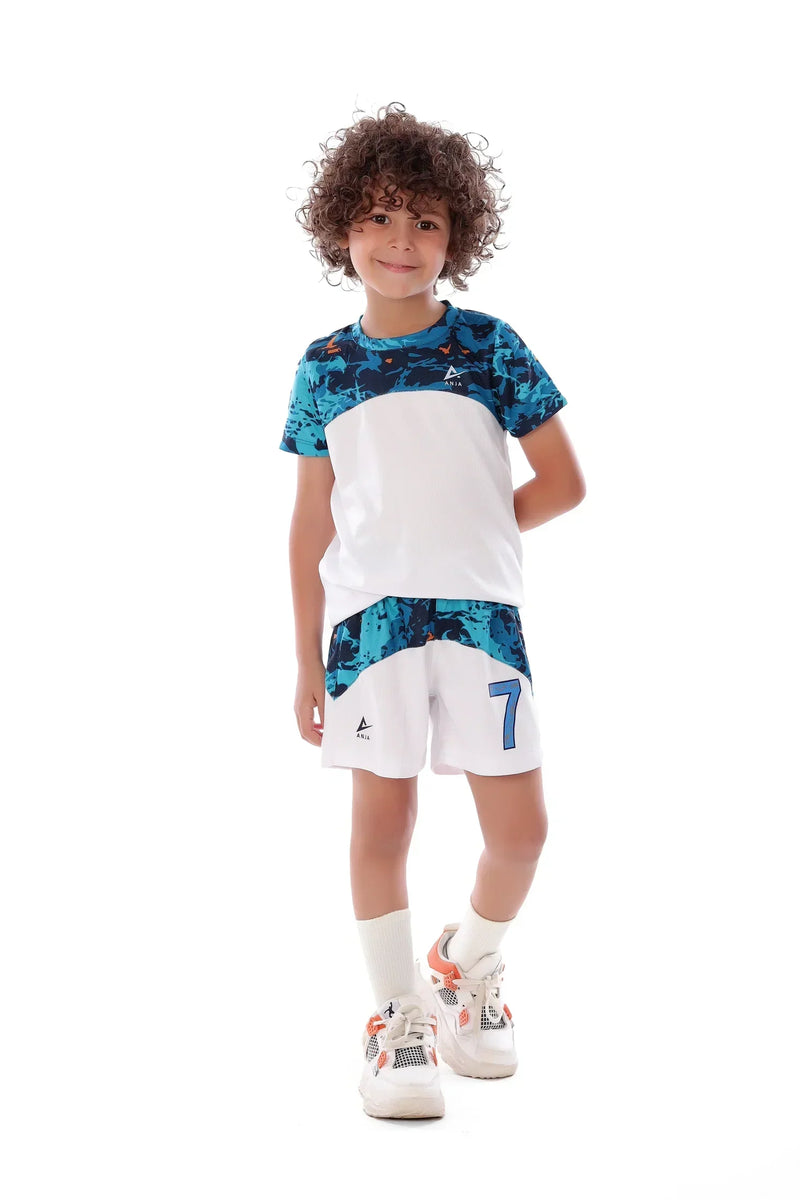
For training, a double-layer or drawstring short is the sensible buy: the drawstring absorbs a season of growth and the inner layer prevents thigh chafing over long drill sessions. Browse the kids sports shorts range and check the waistband construction before the colour. For match day, the short is part of the set and should match the squad exactly, which usually means buying it together with the shirt as a matched black and white t-shirt and shorts set.
Socks split the same way. Training socks are whatever survives; match socks are club colour, pulled over the shin guard, and should be a pair kept only for matches. Base layers belong to training in Egypt's cool months and to match day only when the child genuinely needs a thermal layer in January.
How Many Kits an Egyptian Club Player Needs Per Season
Here is the realistic count for a child training three times a week from September to May.
- Three training shirts, so two are always clean and dry between sessions
- Two pairs of training shorts, ideally double-layer with a drawstring waist
- One complete match set: shirt, shorts, socks, in exact club colours
- Two pairs of training socks plus one match pair kept separately
- One long-sleeve performance top for December to February and for the walk home
- One tight base-layer shirt, used under the training shirt in cold weeks
- A separate bag or compartment for the match kit so it never gets grabbed for a Tuesday session
- One spare pair of shorts left permanently in the bag — the piece most often forgotten
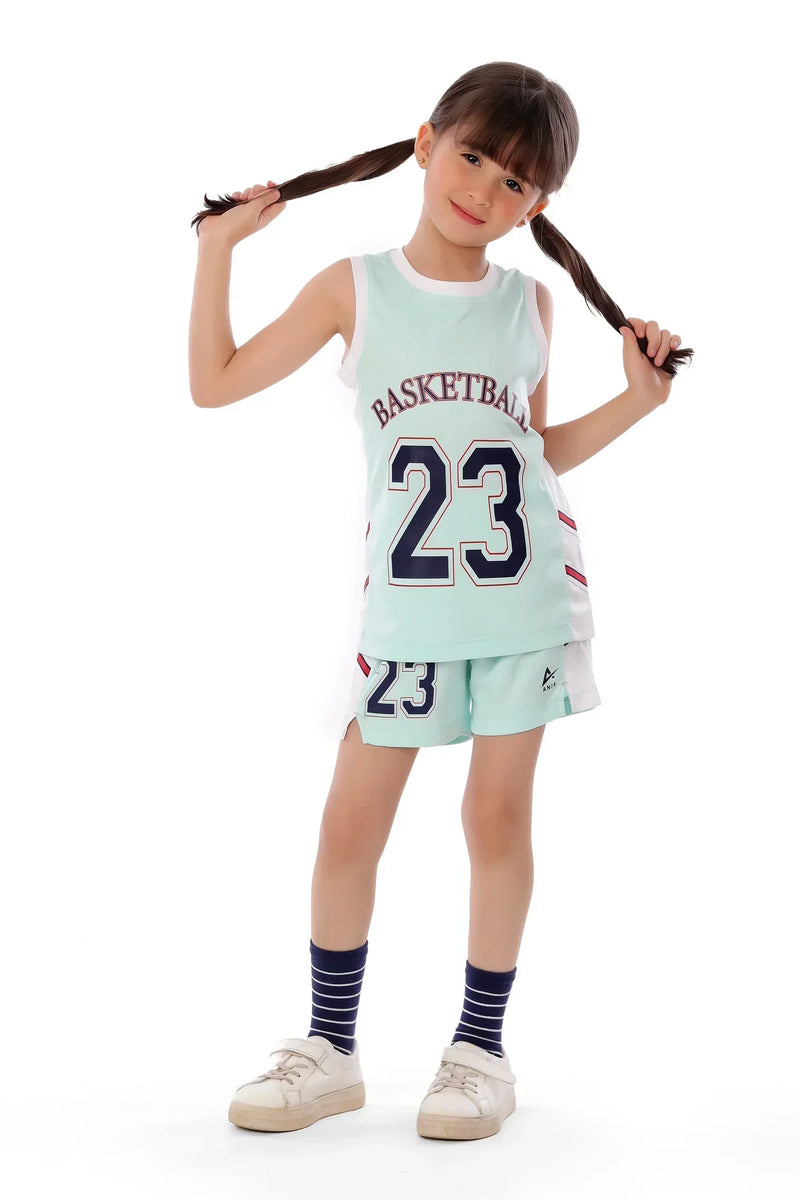
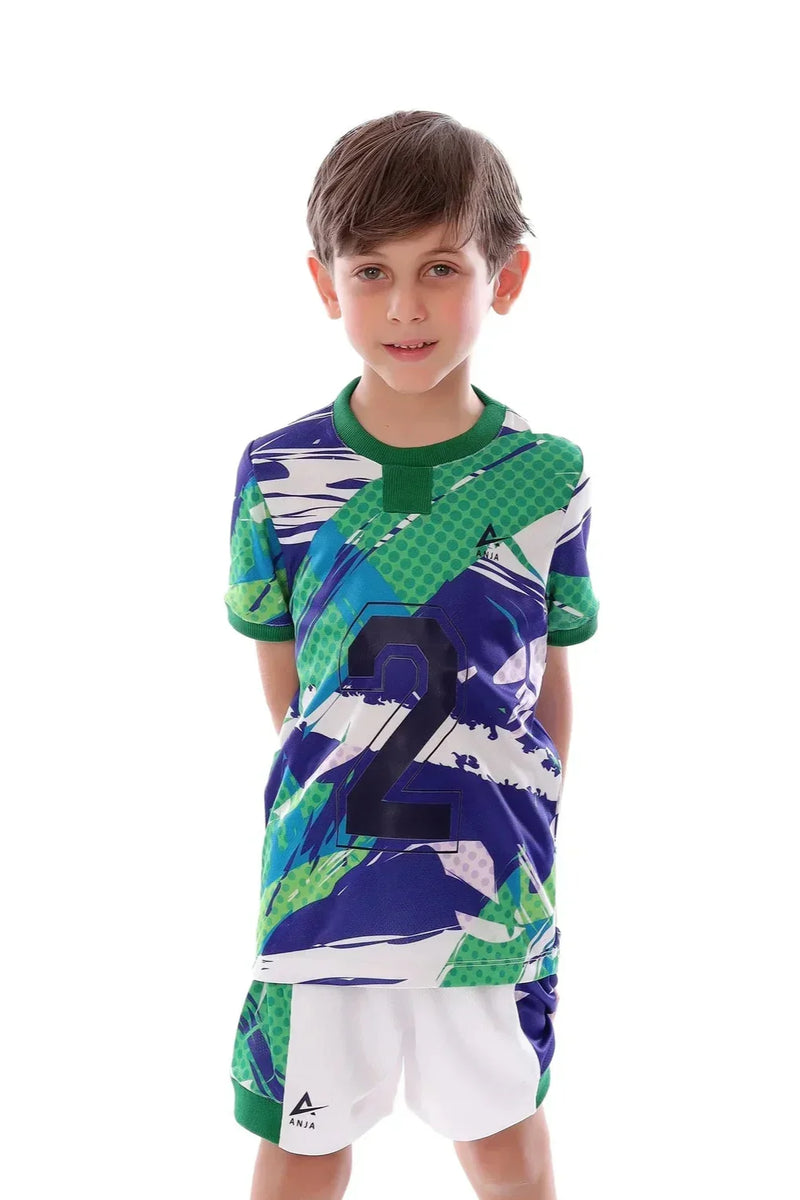
Families with two children in the same club usually buy training pieces in different colours and the match sets identical, which makes sorting laundry survivable. A mixed squad can build both halves from the same football kit collection, and girls' squads generally settle on one set style such as the girls basic t-shirt and shorts set for the whole team.
Training Kit for Egyptian Heat: September, April and May Sessions
Egypt has two windows where training clothing genuinely affects whether a child finishes the session: early September, and April into May. In both, afternoon sessions start at 35°C or above.
In those weeks the training kit should shift lighter, not heavier: the lightest shirt in the drawer, light colours rather than black, and a second shirt in the bag to change into at the halfway point. Cotton is the worst possible choice here, because it holds the sweat rather than moving it. A loose light polyester knit and a cap for outdoor sessions do more for a child's session than any drink brand.
From December to February the logic reverses: base layer under the training shirt, long sleeves on top, and a top to put on the moment the session ends. Most youth injuries in an Egyptian winter come from sitting in a wet shirt after training, not from the training itself.
Building a School Team Kit on One Budget
School teams rarely have a kit budget, so the practical approach is one match set per child plus whatever they already own for training. Two decisions make this work. Choose a set style that comes in two colourways, so the team has a home and away option without a second order. And size generously in length but not in width, since the same set often has to last two school years.
For a mixed team, matching boys' and girls' sets in the same colourway is worth the small extra effort: it photographs as one team, and it removes the argument about who wears what. Both halves exist in the girls sportswear collection and the boys sportswear collection in the same palettes, and a plain matched option like the boys basic t-shirt and shorts set is the cheapest way to get a whole squad looking uniform.
Frequently Asked Questions
Can my child just use the match kit for training too?
Technically yes, but it will not survive. Training means roughly three washes a week against one for the match shirt, so within a season the number is faded and the collar has gone. Keep the match set for matches and buy cheaper training shirts.
What is the actual difference in fabric between a training shirt and a match shirt?
Weight, mostly. Training shirts sit around 150 to 180 gsm for durability; match shirts sit around 120 to 150 gsm to run cooler. The heavier knit lasts longer, the lighter knit feels better at full sprint.
How many training shirts does a club player need?
Three, if the child trains three times a week. Two means washing every night in humid weather and putting on a shirt that never fully dried, which is how the smell becomes permanent.
Do I need a separate kit for September and for January in Egypt?
Not a separate kit, but a separate layer. Lightest shirt plus a spare for September and May; base layer, long sleeves and a top to put on afterwards for December to February.
Is it cheaper to buy a matched set or shirt and shorts separately?
Matched sets are usually cheaper per piece and they guarantee the shirt and shorts are the same colour, which matters for a squad. Buy separates only when a child needs two different sizes top and bottom.