Egypt produces more world-class squash players than any other country, and every one of them started in the same place: a sealed glass or plaster box with no breeze, where a forty-shot rally leaves you wetter than an hour of tennis. That environment, not fashion, is what should decide what a squash player wears. This guide works through squash clothing the way a coach would - shirt weight before shirt colour, shorts length before branding, and drying speed before everything.
Why Squash Punishes Kit That Tennis Forgives
A tennis player gets a breeze, a bench, ball changes and a walk to the baseline. A squash player gets none of that. The differences compound into three specific demands on the clothing.
The Enclosed Court and Zero Airflow
A squash court is a box. Whatever heat and humidity two players generate stays in it. In an unconditioned court in Cairo in June, the air inside sits several degrees above the corridor outside, and the humidity climbs with every rally. This is why a shirt that feels light in a shop can feel like a wet towel by the third game, and why weight per square metre matters more in squash than in any other racket sport. The squash clothing collection is built around that constraint.
Wall Contact and Abrasion at the Shoulder and Hip
Squash players brush the side wall. It is not a mistake, it is the geometry of the court. Over a season, that contact wears through thin knits at the shoulder seam and the hip, which is why squash shirts want a slightly denser knit than a tennis shirt even though the sport is hotter. A boys' squash graphic t-shirt in a proper performance knit survives wall contact that a thin cotton tee will not.
Sudden Direction Change and Deep Lunges
The squash lunge goes deeper than the tennis lunge, repeatedly, into the front corners. Anything that restricts the hip - a low waistband, a stiff side seam, a lining that bunches - shows up as a lost point rather than as discomfort.
Squash Shirts: Short Sleeve, Long Sleeve and Quarter-Zip
Most players over-buy shirts and under-think them. Three types cover a full year in Egypt.
The Short Sleeve Performance Shirt for Match Play
This is the default and should be the lightest thing you own, with a flat shoulder seam and mesh or an open knit across the upper back. A girls' squash racket graphic t-shirt works for match play and for the club league, and the rest of the performance t-shirts collection gives you the same construction in other colours so you are not washing one shirt twice a week.
The Long Sleeve Shirt for Warm-Up and Cold Courts
Squash courts in older Egyptian clubs are genuinely cold in January before anyone has played in them, and a cold shoulder is the fastest route to a strained rotator cuff in a junior. A long sleeve squash top is warm-up kit that gets removed after the first game, not match kit.
The Quarter-Zip for the Gap Between Courts
The ten minutes between a warm-up and a match - standing in a corridor with a fan on - is where juniors get stiff. A quarter-zip performance top vents from the neck, which means it can be worn over a wet match shirt without trapping everything.
Squash Shorts: Length, Waistband and the Double-Layer Question
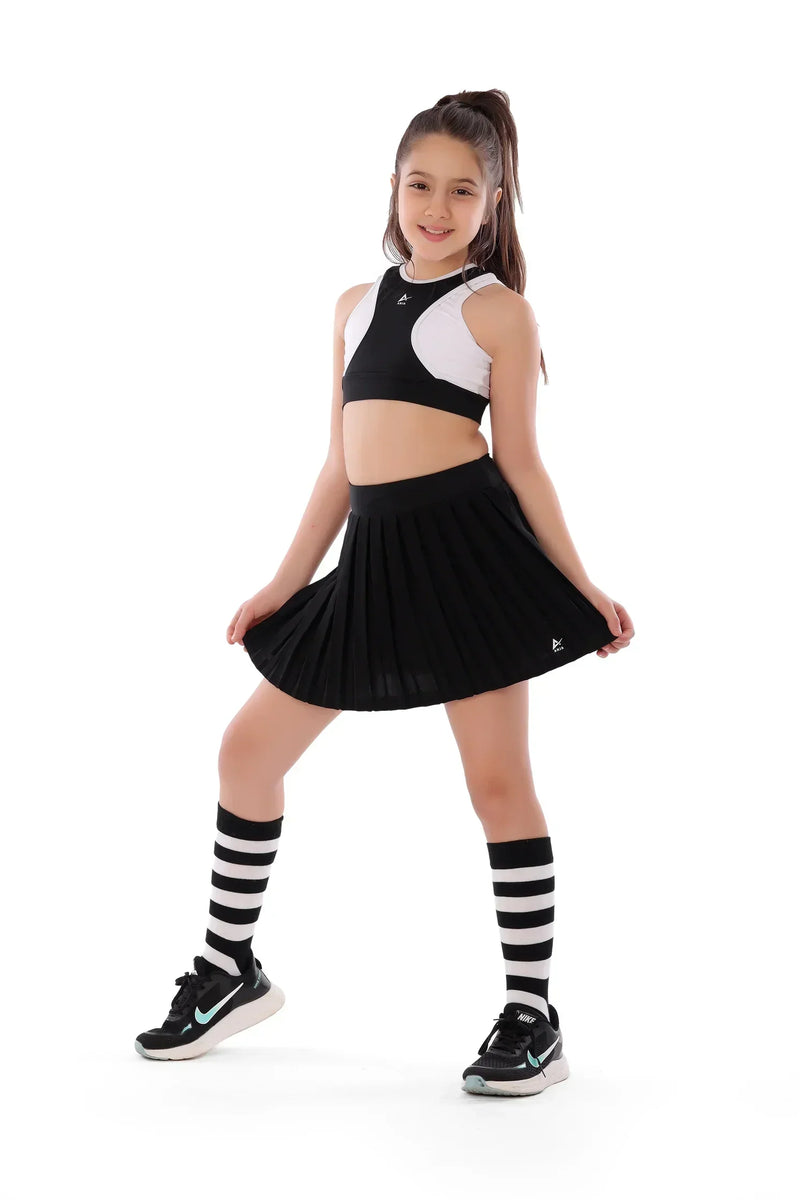
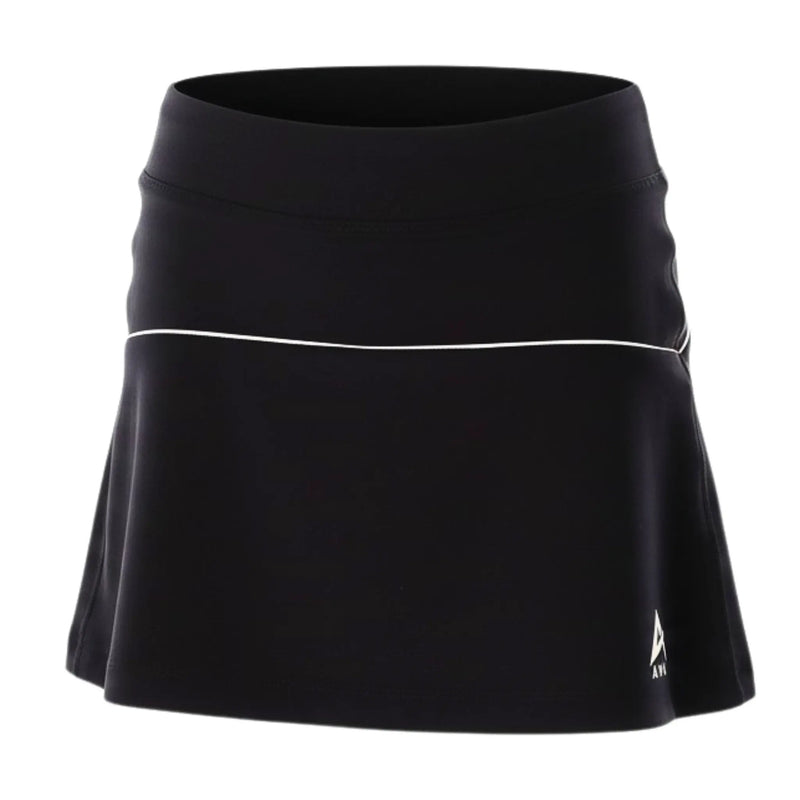
Squash shorts sit above the knee. Longer than that and the hem catches on the deep front-corner lunge; much shorter and there is nothing protecting the thigh when a player slides on a dusty court. A single stripe cut like the boys' double-layer stripe shorts or the girls' equivalent hits that window, and the rest of the sports shorts collection covers the knee-length option for players who prefer more coverage off court.
Three details decide whether shorts are good for squash. The waistband must be flat and wide, because a rolled waistband under a shirt is what a player notices at 9-9. Pockets should be shallow or absent - a deep pocket fills with air and flaps. And the inner layer, if there is one, must be shorter than the outer and made from something that does not hold water.
Fabric Weight and Moisture Movement for Squash Clothing
The honest test for squash fabric is not how it feels dry, it is how it feels wet. Polyester and polyester-elastane blends move sweat to the surface and keep their shape when soaked. Cotton absorbs it, gains weight and clings, and in a sealed court with saturated air it never dries at all - it just gets heavier for the rest of the match.
Look for a mid-weight knit rather than the thinnest available. Ultra-light shirts feel superb for two games and then tear at the shoulder on the first hard wall brush. Look for flat-locked seams, a hem that does not curl, and elastane in the range that lets the shirt recover after a lunge instead of bagging at the waist.
Squash Kit Versus Tennis Kit: What Transfers and What Does Not
Plenty of Egyptian juniors play both, and the honest answer is that most of a wardrobe crosses over while a few items do not.
| Item | Squash requirement | Tennis requirement | Can it cross over? |
|---|---|---|---|
| Shirt weight | Mid-weight, abrasion-resistant | Light, breathable, sun-exposed | Squash shirt works for tennis; the reverse wears out fast |
| Shorts length | Above the knee, no deep pockets | Above or at the knee, pockets useful for a ball | Squash shorts work for both; tennis shorts with deep pockets do not |
| Shoes | Non-marking indoor gum sole | Outsole for hard or clay court | No - this is the one item that never crosses |
| Socks | Cushioned, mid-height for court dust | Cushioned, any height | Yes, fully |
| Warm-up layer | Quarter-zip for corridor waits | Full tracksuit for open courts | Quarter-zip works for both |
| Colour | Anything - no sun exposure | Light colours preferred in Egyptian summer | Tennis whites work indoors, not the other way round in July |
Squash Clothing Rules at Egyptian Clubs and Junior Tournaments
Squash is less strict than tennis on collars, but two rules come up repeatedly at Egyptian junior events. Shoes must be non-marking with a gum or light sole, and a referee will stop play over a sole that leaves a streak on the floor. And junior tournaments increasingly require protective eyewear for under-19 categories, which affects nothing about the clothing except that a shirt with a high collar can push a strap out of position.
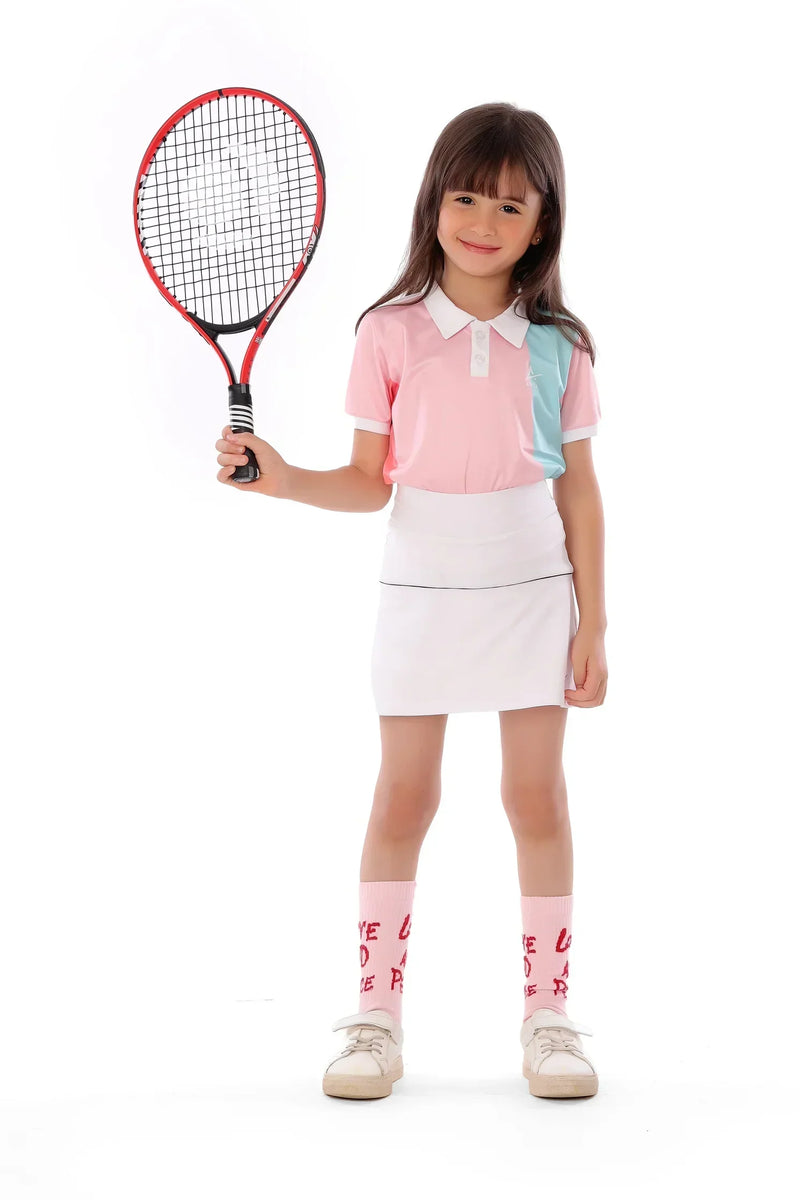
Beyond that, most clubs simply want proper sports clothing rather than street wear. The squash and tennis sets are put together with those expectations in mind, so a matched top and short passes without a second look.
Non-Marking Shoes, Socks and Eye Guards: The Rest of the Squash Kit
Clothing is half the kit. The other half fails more often.
- Non-marking indoor shoes, replaced when the tread edge rounds off - not when they look worn
- Two pairs of cushioned socks per session, because one pair will be soaked by the second game
- Protective eyewear for juniors, checked for fit against the shirt collar
- A grip towel, kept out of the bag and in a pocket of its own
- Two spare grips - Egyptian humidity kills a grip faster than the racket wears out
- A wide sweatband if the player is a heavy sweater, which most are in a sealed court
- A change of shirt for between matches on a tournament day
Buying Squash Clothing for a Growing Junior
Junior squash kit gets outgrown faster than it wears out, which changes the buying logic. Buy shirts one size up but shorts in the correct size - a loose shirt is fine and a loose short is a hazard on a lunge. Prefer plain or simple graphics over dated team prints, because a junior will refuse to wear last season's tournament shirt regardless of how good the fabric is.
On quantity: a junior training three or four times a week needs four shirts and three shorts as a working minimum, because there is rarely time for kit to dry fully between sessions in Egyptian humidity. Two of everything means playing in something still damp, which is how skin irritation starts.
Washing Squash Kit After a Cairo Session
Squash kit comes off wetter than any other sport's, and the single biggest mistake is sealing it in a bag until the next day. Bacteria multiply in a warm wet bag for twelve hours, and by then the odour is in the fibre rather than on it. Get the kit out of the bag the moment you are home, rinse it in cold water, and wash at 30 degrees without softener.
Dry in shade with air moving around the garment - a fan indoors beats a windless balcony. And never tumble-dry performance knits on heat; it breaks the elastane and the shirt starts bagging at the hem within a month.
Frequently Asked Questions
What should you wear to play squash?
A light or mid-weight performance shirt, shorts above the knee with a flat waistband, cushioned socks and non-marking indoor shoes. Avoid cotton entirely - in a sealed court it absorbs sweat and never dries.
Can I wear my tennis clothes for squash?
Mostly yes for the clothing, never for the shoes. Tennis shirts and shorts work fine as long as the shorts do not have deep pockets, but tennis outsoles mark an indoor floor and a referee can stop play over it.
How long should squash shorts be?
Above the knee. A longer hem catches during the deep front-corner lunge, which is the most repeated movement in the sport.
Why does squash kit smell worse than other sportswear?
Because it comes off the court wetter, in a sealed hot court, and usually goes straight into a closed bag. Odour sets into the fibre within a few hours, so rinsing the same day matters more than the wash cycle you choose.
How many shirts does a junior squash player need?
Four shirts and three shorts for someone training three or four times a week. Egyptian humidity means kit often does not dry fully between sessions, so a two-item rotation forces playing in damp clothing.