Every September an Egyptian parent gets a sheet of paper from the school, or a message on the class group, that says something like "PE kit: white t-shirt, navy shorts, trainers". Four words of actual instruction, and then nine months of working out what they meant. By February a third of it has been lost and somebody in the group is asking whether the school really minds about the colour of the socks.
This is the checklist, not the buying guide. If you are still deciding what fabric to put her in, or whether a cotton t-shirt is good enough for a Cairo afternoon, our guide on how to choose kids sportswear for school PE and club training is the piece that answers that. What follows is the other half of the job: exactly what goes on the list, how many of each, what to write her name on, and what you will have to buy again in February whether you planned to or not.
Everything here is for children aged four to sixteen. That is the whole range Anja makes — there is no adult, men's or women's line at all — and the size bands you will see on our tops and bottoms run 4-6, 6-8, 8-10, 10-12, 12-14 and 14-16 Years.
What an Egyptian School Actually Requires on the PE Kit List
Start by separating what is written down from what is enforced. They are rarely the same thing.
Almost every school in Egypt, national or international, asks for four things: a plain t-shirt in a stated colour, a bottom in a stated colour, trainers that are not school shoes, and the child's name on all of it. That is the enforced list. A PE teacher sends a child to the side of the hall for turning up in jeans or school shoes; no PE teacher in the country has ever done it over the shade of white.
Then there is the written list, which usually adds a tracksuit, a cap, a towel, a water bottle, spare socks and sometimes a swimming kit — real requirements on specific days and dead weight on the rest. The mistake is treating it as a single September shopping trip instead of as a calendar.
Before buying anything, ask the school three questions in writing: which days are PE days, does the kit stay at school or come home, and is the t-shirt colour a rule or a preference. Those three answers change the quantities below more than anything else on this page.
The School PE Kit List Item by Item
Here is the full list with what the item is actually for, and the point at which parents go wrong on it.
The PE t-shirt. Plain, in the school's colour, short sleeve, no graphic. This is the single highest-wear item in the whole kit and the one bought cheapest. A collared polo is worth considering if the school allows it, because a polo survives being worn as a half-smart top on a school trip and a round-neck tee does not — our Boys Polo T-Shirt does both jobs, and the knitted collar holds its shape through a term of washing rather than curling at the points. Where parents go wrong: buying one.
The bottom. Shorts for September to November and March to June, a track pant for December to February, both in the school's colour. Most Egyptian schools are more specific about the bottom than the top, because the bottom is what looks untidy fastest. Our Girls Athletic Track Pants have a drawstring waist, which matters more than it sounds: a drawstring is the one adjustment a child can make herself in a changing room without an adult, so a pair that is slightly loose in October still sits properly in December. Where parents go wrong: buying only shorts, then scrambling in January.
Trainers. Not school shoes, not fashion sneakers with a hard flat sole, and not the pair she wears every day. A separate pair kept for PE lasts the year and keeps hall floors clean, which some schools police. Where parents go wrong: letting the PE pair become the everyday pair by October.
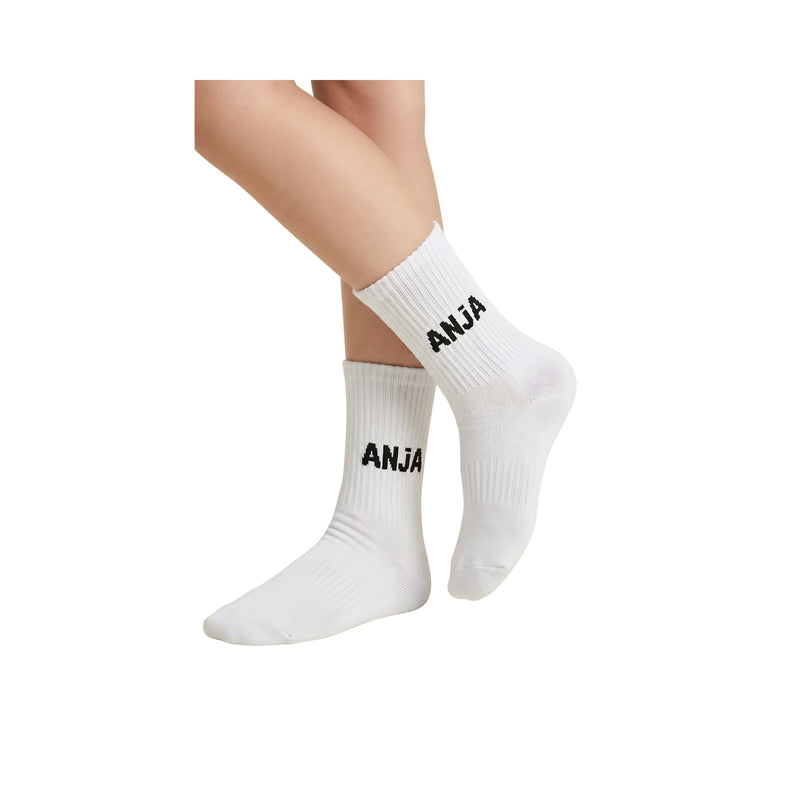
Socks. Sports socks, not school socks, in white or the school colour. Thicker than a school sock, higher than an ankle sock if there is any football involved. Where parents go wrong: three pairs, when the real number is higher.
A base layer or undershirt. Not usually on the school list, and genuinely useful from December. It is what lets the child take the tracksuit top off at eleven in the morning and still be dressed. Where parents go wrong: using a sleeveless cotton vest, which means removing the outer layer leaves a child in a vest, so she keeps the outer layer on and overheats instead.
A tracksuit top or hoodie. On the list at most schools, worn before and after rather than during. Where parents go wrong: buying it in September, when it does not get used until the second half of November.
A water bottle. Compulsory in most Egyptian schools and the item most often forgotten. Keep a refillable one living permanently in the PE bag rather than travelling between the kitchen and the school bag.
A small towel and a cap. Rarely on the list; both earn their place from April onwards, and the towel from the first swimming lesson.
How Many of Each PE Item a Week Really Needs
This is where the list stops being a list and becomes a decision, and it turns on one fact: does the kit come home after every session, or live in a locker until the end of the week?
For a school with two PE days a week where the kit comes home each time, the working set is two t-shirts, two bottoms, three pairs of socks, one pair of trainers, one tracksuit top and one base layer. Two of each means one is in the wash on Sunday evening without a crisis.
For a school with two PE days where the kit stays in a locker all week, you need three t-shirts and three bottoms, because the kit that has sat in a locker since Tuesday is not the kit you want her putting on again on Thursday.
For daily PE or a child in a school team, four t-shirts and three bottoms, and the socks number goes to five.
Socks are the item parents under-buy most consistently and lose most often. Buy them in a single colour, in one go, in a number that feels excessive: a missing sock out of five identical pairs is invisible, and out of two it is a crisis at seven in the morning.
Shorts, Track Pants and the Weather the PE Kit Has to Cover
Egypt gives you three distinct PE climates in one academic year, and a kit list written in September only covers one of them.
September to mid-November is hot. PE is shorts, a short-sleeve top, and the only real decision is fabric. This is the stretch where a heavy cotton t-shirt actively makes a child's session worse, because it absorbs sweat and then holds it against the skin for the rest of the day. Our comparison of cotton and polyester for sports t-shirts works through that properly, and the short version for school PE specifically is that the t-shirt the school sees is a polyester or blended one and the cotton one stays for the weekend.
Mid-November to February is the part that catches people. A Cairo morning in January is cold at seven-thirty and the same day is warm by one. A child sent to school in a tracksuit with nothing usable underneath will be too hot by the middle of the morning and will not take it off, because taking it off leaves her in a vest. The fix is the three-layer approach: base layer, PE t-shirt, tracksuit top over the pair, so that removing the outer layer leaves a complete PE kit. Our winter range is built on that assumption, which is that in Egypt the warm layer is designed to be removed rather than worn through.
March to June is hot again, and then increasingly hot: shorts, the lightest top the school permits, a cap if PE is outdoors, and the water bottle stops being optional. This is also when an outgrown pair of shorts shows up, because the child grew over the winter inside a tracksuit where nobody could see it.
What Parents Over-Buy for School PE
Four items account for most of the money wasted on a PE kit in Egypt, and they are all bought for good reasons.
The first is the full matching tracksuit set in September. It sits in a drawer for eleven weeks, by which point the bottom half may already be short on her. Buy the top when the weather turns and the bottom when you can see her current leg length.
The second is multiple pairs of trainers. One good pair that is kept for PE outlasts two cheap pairs that get worn every day, and the school does not notice the brand.
The third is the sport-specific item bought on the assumption the school will use it. Football socks, shin pads or goalkeeper gloves bought in September because PE "will probably include football" very often never leave the bag. Wait until the sport is on the timetable.
The fourth is buying two sizes up to "last the year". It does not work on a bottom: two bands too big sits below the hip, the crotch drops, and the child pulls at it all session until she refuses to wear it. One size of growing room is sensible on a bottom and none is needed on a t-shirt beyond a normal fit.
Labelling a PE Kit so It Comes Home Again
A PE kit is the most frequently lost set of clothing a child owns, because it is the only one she takes off in a room with twenty other children and then has to find again in four minutes.
Label everything in the same place on every item so she knows where to look: inside the neck for tops, inside the waistband for bottoms, on the tongue for trainers, on the cuff for socks. Full name, not initials — there are three Mohameds and two Malaks in most Egyptian classes. Write on the care label with a laundry marker rather than a ballpoint, which bleeds into polyester within two washes, and re-check iron-on labels in January because the ones applied in a hurry in September come off in the wash.
Label the bag and the bottle more visibly than the clothes. Those two get left behind in the hall rather than mixed up in a pile, and a name on the outside of a bottle is the difference between it coming back and it not.
The PE Bag and What Lives in It Permanently
The PE bag is a separate bag, not a compartment in the school bag, and the whole system works better if a fixed set of things never leaves it.
Permanent residents: the water bottle, a small towel, a spare pair of socks, a plastic bag for wet or muddy kit, and a hair tie or two for girls with long hair. Those five live in the bag all year and get checked on a Sunday, not on a PE morning. The clean t-shirt, bottom and winter base layer go in the night before, and the swimming kit, football socks and cap go in only for the specific session.
The spare socks are the highest-value item on that list for the lowest cost. A child who steps in water on a pool deck or a wet pitch and has no dry socks spends the rest of the school day in wet ones.
Mid-Year PE Kit Replacement: What Fails by February
Plan on replacing part of the kit in the middle of the year. This is not a sign you bought badly; it is how a school year works on clothing that gets washed twice a week.
The bottoms go first, almost always at the knee or the hem. A child who sits on a hall floor or kneels on a pitch wears the knee through from the inside long before it looks worn from the outside. Expect one replacement bottom between January and March, and if the school colour is specific, order it before you need it.
The t-shirts fail differently. They do not tear; they go grey, or the white one picks up a permanent tint from a wash it should not have been in, and a school that cares about the colour of the top notices that long before a worn knee. Our guide to caring for activewear so it lasts longer covers the washing that causes it, and the most useful change is washing white PE tops as their own small load.
Socks disappear rather than wear out, so budget on losing a third to half of them across the year. Trainers are the unpredictable one, and the thing to watch is whether the heel has started to lean rather than how the upper looks. What usually survives the whole year is the tracksuit top, the base layer and the bag.
Sizing a School PE Kit for Ages 4 to 16 Without Guessing
Age is the worst available predictor of size in exactly the bands where most PE kit is bought. Two ten-year-olds in the same class can be two full size bands apart, and the 10-12 and 12-14 Years bands are where that gap is widest.
Measure rather than assume, and measure three things: chest for the top, waist for the bottom, and inside leg for the length of a track pant. Our kids' sportswear size guide sets out how to take those measurements on a child who does not want to stand still, and reading it once in September saves one return.
A PE t-shirt should be loose enough to lift the arms fully without the hem riding up above the waistband, and no looser. On the bottom, allow one size band of growing room and check the hem against the trainers she will actually wear: on a tapered jogger hem extra length does not hang, it bunches above the shoe and frays from underneath. If it concertinas on the trainer, the pair is too long.
If you are buying for two children at once, give them different sock colours or different bags even where the uniform is identical, or you will be sorting two identical sets of grey kit out of one wash all year.
PE Kit for Ages 4 to 7 vs Ages 12 to 16
The same list behaves very differently at the two ends of the range.
For a child of four to seven, PE is short, mostly indoors, and the constraint is whether she can change by herself: elastic waists rather than buttons, trainers with a strap rather than laces. Quantities can be lower because the sessions are shorter, but the loss rate is much higher, so the socks number stays high. Browse our boys' range and girls' range by size band rather than by age label, because at this end of the scale a year of difference is a whole size.
For a child of twelve to sixteen the constraints change completely. She will care what it looks like, which decides whether she wears it willingly, and she may be on a school team, which doubles the wash load and adds a second set of kit entirely. What stays the same across the range is the three questions at the start: which days, does it come home, and is the colour a rule.
The Anja School PE Kit Checklist
- Ask the school which days are PE days, whether the kit comes home, and whether the colour is a rule or a preference, before buying anything.
- Two t-shirts and two bottoms if the kit comes home each session; three of each if it lives in a locker all week.
- Four t-shirts and three bottoms for daily PE or a school team.
- Five pairs of sports socks in one identical colour, bought in a single order.
- One pair of trainers kept for PE only, not the everyday pair.
- Shorts for September to November and March to June; a track pant for December to February.
- A base layer from December, and buy the tracksuit top in November, not September.
- Full name in the same place on every item: neck, waistband, shoe tongue, sock cuff.
- Keep a permanent kit in the bag: bottle, towel, spare socks, plastic bag, hair ties.
- One size band of growing room on bottoms, none on tops, and check the hem against her trainers.
- Budget for one replacement bottom between January and March, and wash white PE tops as their own load.
Frequently Asked Questions
How Many PE T-Shirts Does One Child Need for a School Year?
Two if the kit comes home after every session, three if it stays in a school locker all week, and four for daily PE or a child on a school team. The t-shirt is washed more often than anything else in the kit, so the number is set by your laundry cycle rather than by the number of PE days.
Does Anja Make School PE Kit in Adult Sizes?
No. Anja makes sportswear for girls and boys aged 4 to 16 only, and there is no adult, men's or women's range at all. The size bands on our tops and bottoms run 4-6, 6-8, 8-10, 10-12, 12-14 and 14-16 Years, and 14-16 Years is the largest we offer.
When Should an Egyptian Parent Buy the PE Tracksuit?
In November rather than September. It does not get used until the second half of November in most of Egypt, and buying it late means buying it against the child's actual leg length after a term of growing rather than guessing in advance.
What Part of a School PE Kit Needs Replacing Mid-Year?
The bottoms, almost always at the knee or the hem, somewhere between January and March. T-shirts tend to go grey rather than tear, socks disappear rather than wear out, and the tracksuit top, base layer and bag normally survive the full year.
Should a PE Kit Be Bought One or Two Sizes Too Big?
One band of growing room on the bottom and none on the top. Two bands too big on a bottom sits below the hip, the crotch drops, and the child pulls at it all session until she stops wearing it. Measure chest, waist and inside leg rather than going by age, especially in the 10-12 and 12-14 Years bands.
How Should a PE Kit Be Labelled so It Is Not Lost?
With the child's full name, in the same place on every item, so she knows where to look: inside the neck on tops, inside the waistband on bottoms, on the tongue of the trainers and on the sock cuff. Use a laundry marker rather than a ballpoint, and label the bag and the bottle more visibly than the clothes.