Most Egyptian parents build a child's activewear wardrobe the slow way: a t-shirt in September because the school asked for one, shorts in October because the first pair shrank, a hoodie in December when the mornings turn cold, and leggings in February because the shorts no longer fit. Four separate trips, four separate decisions, and a drawer full of pieces that do not match each other or work together.
A kids activewear set solves a different problem from the one most people think. It is not mainly about saving money — sometimes it does and sometimes it does not, and the difference is predictable. Its real value is that it removes the daily decision, guarantees that every top works with every bottom, and makes it obvious when something is missing. This guide covers what belongs in a set, when a set is genuinely cheaper than buying separates, the order to buy in when the budget is fixed, how the set changes between Egyptian summer and Egyptian winter, how to handle two or three children at once, and how often a set actually needs replacing.
What a Kids Activewear Set Actually Contains
The word "set" is used loosely in the Egyptian market. Some sellers call two pieces a set, some call a five-piece bundle a set, and some use it for a matching print with no thought about whether the pieces get worn together. A useful definition is functional: a set is the smallest group of pieces that lets a child train, cool down and travel home without borrowing anything from the rest of the wardrobe.
The Four-Piece Core
For a child who does school PE twice a week plus one club session, the working core is four pieces: a performance top worn during activity, a bottom that suits the sport, a mid or outer layer for before and after, and a second performance top so the first one can be in the wash. Anja's Basic Starter Pack is built around that logic, and the bundle collection extends it with the long-sleeve and outer-layer options that matter from November onwards.
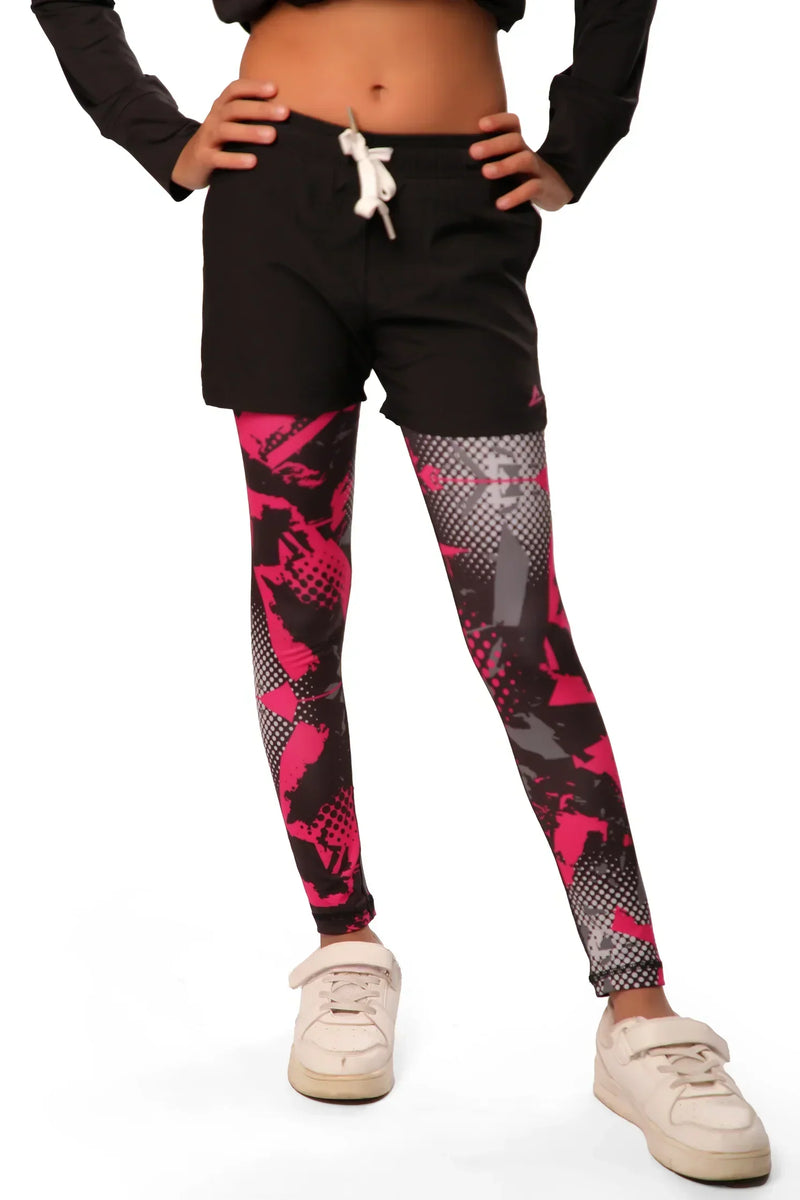
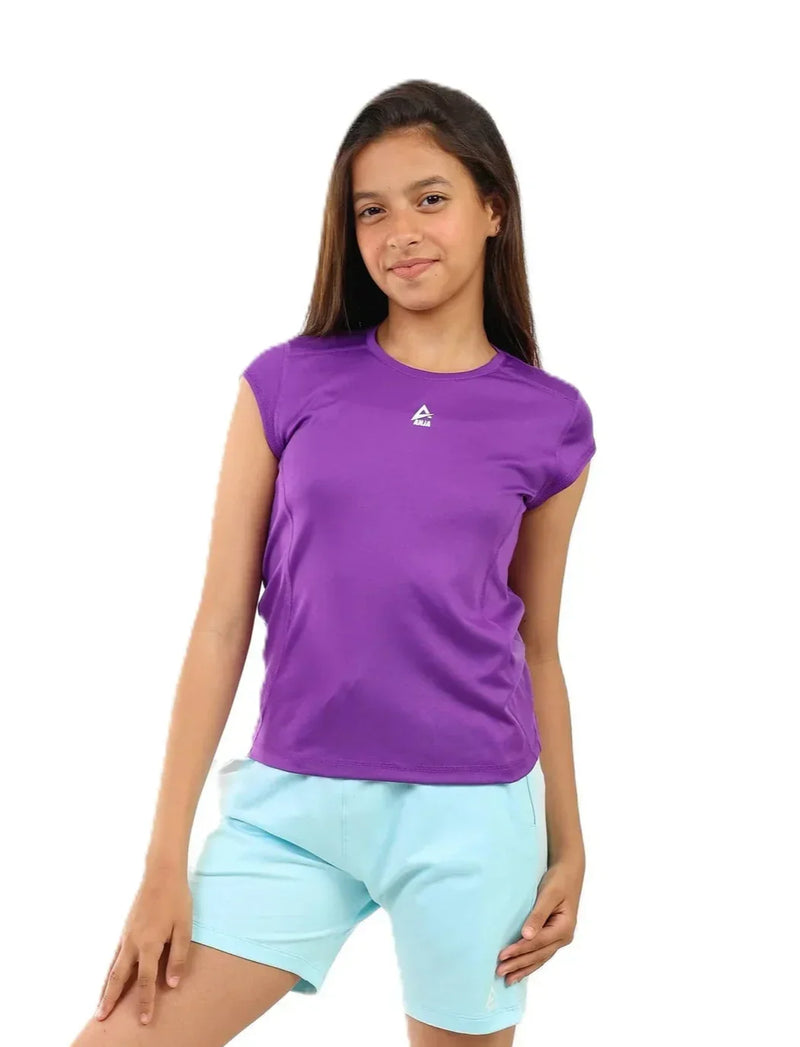
The top is where quality decides everything. A girls long-sleeve performance top or a boys long-sleeve performance top covers both a cool morning and a hot afternoon in a way a cotton shirt cannot, because it moves sweat to the surface instead of holding it. The bottom should follow the sport rather than the season: joggers for football and athletics, leggings for gymnastics and dance, shorts for anything indoors.
The Pieces a Set Never Includes
Sets are sold on the promise of completeness, which makes it easy to assume everything is covered. Three things almost never come in a set and have to be bought separately: sports socks, footwear, and a spare dry t-shirt for the bag. The spare shirt is the cheapest item in the whole kit and the one parents notice most once it is there, because it ends the problem of a child sitting in an air-conditioned classroom in a soaked shirt.
When a Set Costs Less Than Separates — and When It Does Not
A set is cheaper when the bundle price is below the sum of the pieces and every piece gets used. It is more expensive when you pay for a piece you would not have chosen, because an unworn item costs its full price no matter what discount was printed next to it. That is the whole calculation, and it is worth doing in the shop rather than afterwards.
| Situation | Set or separates | Why |
|---|---|---|
| First activewear purchase, nothing owned yet | Set | Every piece is needed, so the bundle discount is real and nothing goes unused. |
| Child already owns two performance tops | Separates | A set adds a third top you will not reach for; buy only the missing bottom. |
| School specified a colour you do not have | Separates | Buy the one compliant piece; a set in the wrong colour is unusable at school. |
| Child between two sizes, mid growth spurt | Separates | Outer layers can be sized up, fitted pieces cannot — a set forces one decision on both. |
| Two siblings starting the same club | Set, one each | Matching pieces cross-cover between them and the per-piece cost drops. |
| Replacing a kit outgrown at the end of a season | Set | Everything is going at once, so the whole bundle is genuinely needed. |
| Budget under one bundle price | Separates | Two correct pieces beat a cheap five-piece bundle where three pieces are filler. |
One more point specific to Egypt: bundle pricing here is often built around the September school rush, and the sets available in March are frequently better value per piece because the seasonal pressure is off. If the current kit will survive to the spring, waiting is a real saving rather than a gamble.
The Buying Order for a Limited Budget
When the budget will not cover a full set, the order matters more than the total. The principle is to buy in descending order of how many days a week the piece gets worn, because a piece worn four times a week earns its price back and a piece worn once a month does not.
- First: one performance top in a neutral colour — white or black passes almost any school requirement. A plain white or black performance tee is the piece with the widest use in the whole wardrobe.
- Second: one bottom matched to the main sport — boys drawstring joggers or girls drawstring joggers for field sports, leggings for gymnastics.
- Third: a second performance top, identical or near-identical to the first. This is the highest-value purchase in the whole list and the one most often skipped, because it is the piece that stops a cotton shirt going to training on laundry day.
- Fourth: a hoodie for arrival, cool-down and the wait for pick-up — the hoodie and pants combo covers this together with a second bottom.
- Fifth: a second bottom, so the wash cycle never forces a substitution.
- Sixth and last: anything sport-specific — a compression layer, a quarter-zip, a puffer jacket.
The common mistake is to reverse items three and four, buying variety before duplication. Variety looks like better value in the drawer and performs worse in practice, because the day the only good top is wet is the day the whole system breaks down. If the budget is genuinely tight, build the duplicates from the lowest-priced performance pieces available rather than buying one expensive piece and covering the gaps with cotton.
Summer Sets Versus Hoodie-and-Pants Sets in the Egyptian Calendar
Egypt does not have four seasons worth planning for. It has a long hot stretch from roughly March to October and a short swing season from November to February, and the set changes shape between them rather than being replaced.
The March-to-October Set
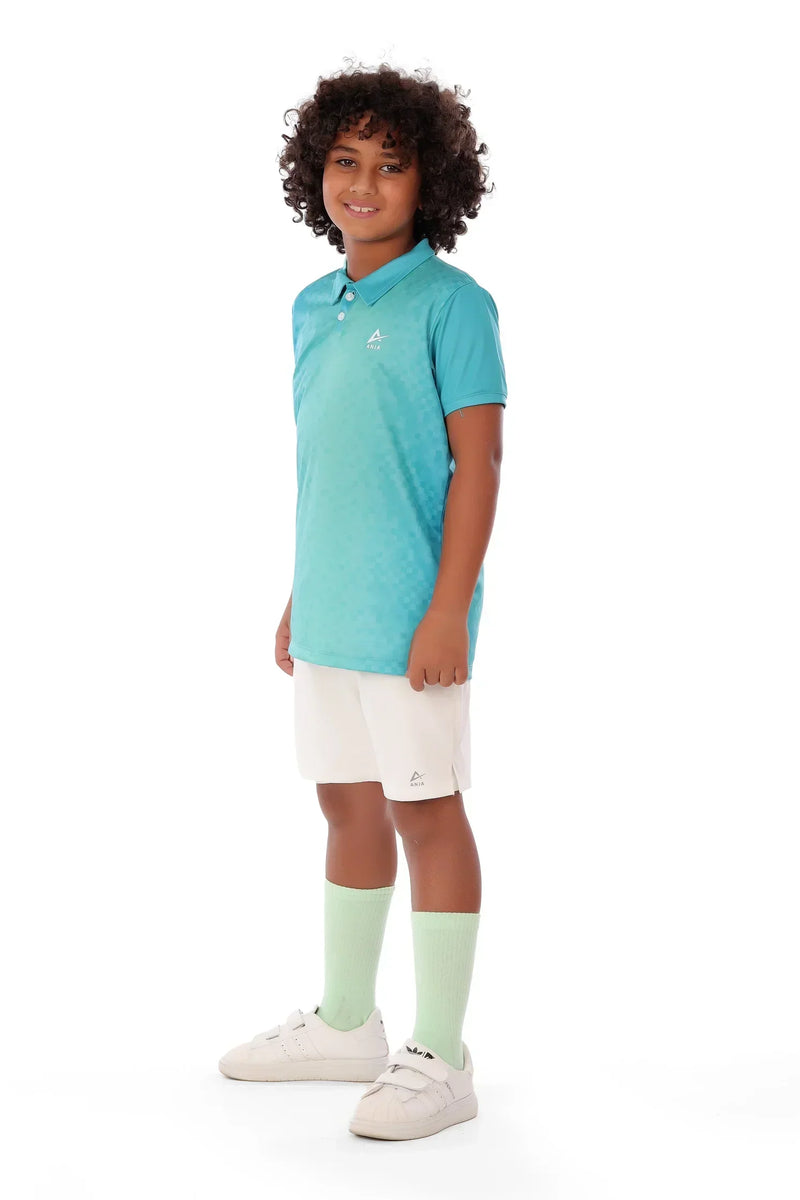
The hot-season set is short-sleeve performance top, shorts or light leggings, and nothing else worn during activity. The mistake here is buying a summer set with any cotton content on the promise of softness — in 35°C with low humidity, a fabric that moves sweat to the surface actually cools the child, which is an advantage Egypt's dry heat offers and a humid coastal climate does not. Cotton in the same conditions holds the sweat, gets heavy and stays damp for hours.
Two tops and one bottom is the working ratio in summer rather than one and one, because kit worn in that heat needs washing after every single session. Colour matters more than most parents expect: a dark top in direct sun is measurably hotter, so keep dark colours for the indoor sessions and whites and light colours for the yard.
The November-to-February Set
Winter in Cairo swings — 9°C at 7am and 22°C by noon is an ordinary January day, and indoor halls are air-conditioned hard enough that a child who stops moving gets cold in minutes. The answer is thin layers rather than one thick piece. A hoodie-and-pants set is the right base for this: a boys sporty pullover hoodie or a girls sporty pullover hoodie over the same performance top used in summer, with joggers instead of shorts.
Zipped and quilted outer layers are the last piece to buy, not the first. A quilted hooded puffer jacket, made in both boys and girls cuts, earns its place for early-morning travel and the wait after a session, not for wearing during activity. Buy it once the layers underneath are right, and size it up — it is the one piece where an extra season of wear costs nothing in performance.
Sets for Siblings: Sharing, Handing Down and Telling Kit Apart
With two or three children the set stops being a wardrobe question and becomes a logistics one. Three things make the difference.
The first is matching on bottoms rather than tops. If both children wear black joggers of the same cut in adjacent sizes, a mixed-up pair still works, and the pair that gets outgrown moves down intact. Tops are where personality belongs, so keep the variation there — the girls sporty set and boys active outfit ranges give each child a distinct look on top while the bottoms stay interchangeable.
The second is deciding before you buy which pieces are meant to be handed down. Hoodies, joggers and puffer jackets survive a second child if they are washed cold and dried in shade. Leggings, compression layers and anything with heavy elastane generally do not — the elastane is spent by the end of the first child's year, and a stretched legging that slides during movement is worse than no legging. Do not plan a hand-down chain around fitted pieces.
The third is marking everything on day one. A small initial in laundry marker inside the waistband and inside the collar takes a minute per piece and removes the weekly argument about whose kit is whose. Marking also makes it obvious when a piece has actually gone missing at school rather than migrated to the other child's drawer.
How Often to Refresh a Set as Children Outgrow It
Sets get replaced for two different reasons and the cycles are not the same. Growth drives one and wear drives the other, and knowing which is about to force your hand saves a rushed purchase.
| Age band | Typical growth per year | Set replaced because of | Practical refresh cycle |
|---|---|---|---|
| 4-6 years | 6-8cm | Growth, mostly in length | Bottoms once a year, tops every 12-18 months |
| 7-9 years | 5-6cm | Wear as much as growth | Full set every 12 months |
| 10-12 years | 6-9cm | Growth, length and width | Bottoms every 8-10 months, tops annually |
| 13-14 years | 8-12cm in a spurt year | Growth, unpredictable timing | Measure quarterly, buy as needed |
Two habits make the timing manageable. Measure standing height against a wall without shoes every three months and write the date on the wall — age labels assume an average child who does not exist, and two eight-year-olds can differ by more than 10cm. And check the waistband of every bottom at the same time: if the elastic no longer recovers and there is no drawstring inside it, that piece is finished regardless of length, which is why a drawstring is worth insisting on when the set is bought.
The Wardrobe Audit Checklist Before You Buy Another Set
Run this before ordering. It takes five minutes at the drawer and it is the difference between a set that fills gaps and a set that duplicates what is already there.
- Count the performance tops that currently fit. If the answer is two or more, you need a bottom, not a set.
- Measure standing height and waist today, not from memory.
- Check every waistband for a drawstring inside the elastic; pieces without one are on borrowed time.
- Stretch every pair of leggings over your hand — if skin tone shows through, it is finished, and it will be discovered in front of a class if you do not catch it now.
- Confirm the school's published PE requirement before buying anything colour-specific, logo-specific or length-specific.
- Check whether a hand-down from an older sibling covers the outer layer this year.
- Price the set against the pieces you would actually choose separately, and count any piece you would not choose at full price.
- Make sure a spare dry t-shirt is in the bag plan — it is not in the set.
- Confirm no fabric softener is in the laundry routine; it coats performance fibres and cancels the property you paid for.
Frequently Asked Questions
What should a kids activewear set include?
Four pieces as a working core: a performance top worn during activity, a bottom matched to the sport, an outer or mid layer for before and after, and a second performance top so the first can be in the wash. Socks, shoes and a spare dry t-shirt are not usually included and need buying separately.
Is a kids activewear set cheaper than buying pieces separately?
Only when every piece in it gets worn. If the child already owns two performance tops, or the school requires a colour the set does not have, the unused pieces cost their full price and separates are cheaper. Price the set against the pieces you would actually choose, then count the ones you would not.
What should I buy first if I can only afford one or two pieces?
One neutral performance top, then one bottom matched to the main sport, then a second top identical to the first. The second top matters more than adding a new category, because it is what stops a cotton shirt going to training on laundry day.
Do I need separate summer and winter activewear sets in Egypt?
No. The same performance tops carry through both; only the bottom and the outer layer change. Shorts or light leggings from March to October, joggers plus a hoodie from November to February, with a puffer jacket for travel and waiting rather than for training.
How often do kids outgrow an activewear set?
Bottoms roughly once a year and faster during a growth spurt, tops every 12 to 18 months. Measure standing height and waist every three months during a growth year, and replace any bottom whose elastic no longer recovers even if the length is still fine.