Most children in Egypt get their structured activity from one club session a week and a school PE lesson, and neither is enough on its own. The gap is filled at home - but "exercise at home" for a child is not a shortened adult workout. It's play with structure. This guide sets out kids' home exercises by age, a weekly routine that survives contact with real family schedules, the safety rules that actually matter, and what they should wear to make the movement easier.
Nothing here needs equipment beyond floor space and, occasionally, a wall.
How Much Activity Children Actually Need
The widely used guideline is around 60 minutes of moderate-to-vigorous activity per day for school-age children, accumulated across the day rather than done in one block. That's the target worth knowing, but it reframes the problem usefully: you are not trying to create an hour-long workout. You're trying to add fifteen or twenty structured minutes to a day that already contains walking, playing and PE.
Home Exercises by Age Group
Ages 4-6: Movement as Play
At this age the goal is coordination and enjoyment, not fitness. Animal walks (bear crawl, crab walk, frog jumps), balancing on one leg, catching and throwing a soft ball, and obstacle courses built from cushions all do the job. Sessions should be 10-15 minutes and should stop while the child still wants more.
Ages 7-9: Adding Structure
Children this age can follow a sequence and count repetitions, which makes simple circuits possible: star jumps, high knees, squats to a chair, a short plank hold, shuttle runs between two markers. Keep it to 15-20 minutes and keep the rest periods generous - children recover quickly but lose focus fast.
Ages 10-14: Real Conditioning
From around ten, a child can handle genuine conditioning work: bodyweight squats, push-ups (from the knees if needed), lunges, planks, burpees, and interval running. Sessions of 20-30 minutes are appropriate. This is also the age where a child starts wanting to improve at a specific sport, which makes sport-specific drills more motivating than general fitness.
A Weekly Routine That Actually Holds
Consistency beats intensity at every age. A routine that survives a busy week is worth more than an ambitious one abandoned by the second week. The Egyptian school week starts on Sunday, so this schedule does too.
| Day | Session | Length |
|---|---|---|
| Sunday | Circuit - jumps, squats, plank | 15-20 min |
| Monday | Rest or free play | - |
| Tuesday | Sport-specific drills (ball work, footwork) | 20 min |
| Wednesday | Rest | - |
| Thursday | Cardio - shuttle runs, skipping, intervals | 15-20 min |
| Friday | Stretching and mobility | 10 min |
| Saturday | Club session or outdoor play | Varies |
Three structured sessions, one light day, and genuine rest. If a week collapses, the rule is to restart on the next scheduled day rather than trying to make up missed sessions - catching up is how routines die.
The Ten-Minute Session for Weeks That Fall Apart
Some weeks there is no twenty free minutes - exams, a late school bus, a family commitment every evening. The routine survives those weeks only if there is a shorter version that still counts as having done it, because the habit is what you are protecting, not the workout.
The ten-minute version is four exercises, no rest between them, repeated twice: thirty seconds of star jumps, ten squats, a twenty-second plank, and ten high knees each side. That is one round of roughly four minutes; two rounds plus a minute of marching at the start is the whole session. It fits before dinner, it needs a square metre of floor, and a child can run it alone once they have done it with an adult two or three times.
Use it as a substitute, not a reward for skipping - the rule that keeps it honest is that a ten-minute session replaces a full one on the same day, and the next scheduled session goes back to normal length.
Rest Days Are Part of the Training
At least one full rest day a week, and ideally two for younger children. Growing bodies adapt during recovery, not during the session, and constant fatigue is the fastest route to a child losing interest entirely. If a child is unusually irritable, sleeping badly or complaining about a session they normally enjoy, that's the signal to give an extra rest day rather than push.
Safety Rules Worth Following
- Bodyweight only before puberty - external weights add little and carry real injury risk on growing joints.
- Stop at form breakdown, not at a rep count. A sloppy tenth squat is worse than nine good ones.
- Warm up for three minutes - marching, arm circles, a light jog on the spot. Children need less warm-up than adults, not none.
- Bare feet or trainers, never socks on a tiled floor.
- Water within reach, especially in Egyptian summer, and no session in the hottest part of the afternoon.
- Pain stops the session. Muscle fatigue is fine; joint pain never is.
Warming Up and Cooling Down, Step by Step
The Three-Minute Warm-Up
In order, thirty seconds each: march on the spot lifting the knees; arm circles forward, then backward; shoulder rolls; ten slow squats to half depth with no speed; leg swings front to back, ten each side; then twenty seconds of light jogging on the spot to finish. The sequence moves from the middle of the body outward and from slow to quick, which is the whole logic of it - nothing held, nothing stretched hard. Static stretching before a session is the common mistake; it belongs at the end.
The Three-Minute Cool-Down
Walk around the room for a minute until breathing settles, then hold each of these for twenty to thirty seconds without bouncing: reach for the toes with soft knees for the hamstrings; heel to the seat, one leg at a time, for the front of the thigh; arm across the chest each side for the shoulders; and a calf stretch with the hands on a wall and one leg back. Finish sitting cross-legged for thirty seconds of slow breathing. This is also the moment children drink - most drink nothing during a home session and finish mildly thirsty, which matters more in a Cairo summer than the stretching does.
Home Drills by Sport: Football, Swimming, Gymnastics and Basketball
From around ten, general fitness stops being motivating and sport-specific work takes over. None of the drills below need a pitch, a pool or a court.
Football
Toe taps on top of a stationary ball for thirty seconds; inside-foot touches between two markers a metre apart; sole rolls dragging the ball side to side; and wall passes with the inside of each foot, twenty per side. Add single-leg balance for twenty seconds each leg - most youth football injuries are landing and turning problems, and balance work is the part usually skipped at home.
Swimming
Swimmers need shoulders and core, both of which train dry. Streamline holds against a wall with arms locked overhead, thirty seconds; shoulder blade squeezes; a superman hold face down on the floor, fifteen seconds at a time; flutter kicks lying on the back; and a plank held to sixty seconds over time. Dry-land work between pool sessions is normal practice and it keeps a swimmer's stroke from falling apart across a break.
Gymnastics
Hollow-body holds for fifteen seconds, bridges from the floor, handstand kick-ups against a wall with an adult watching, straight-leg sits reaching for the toes, and walking on the toes then the heels for balance. Keep it on a mat or a carpet, never on tiles, and stop the moment the back arches in a hollow hold rather than counting to the target.
Basketball
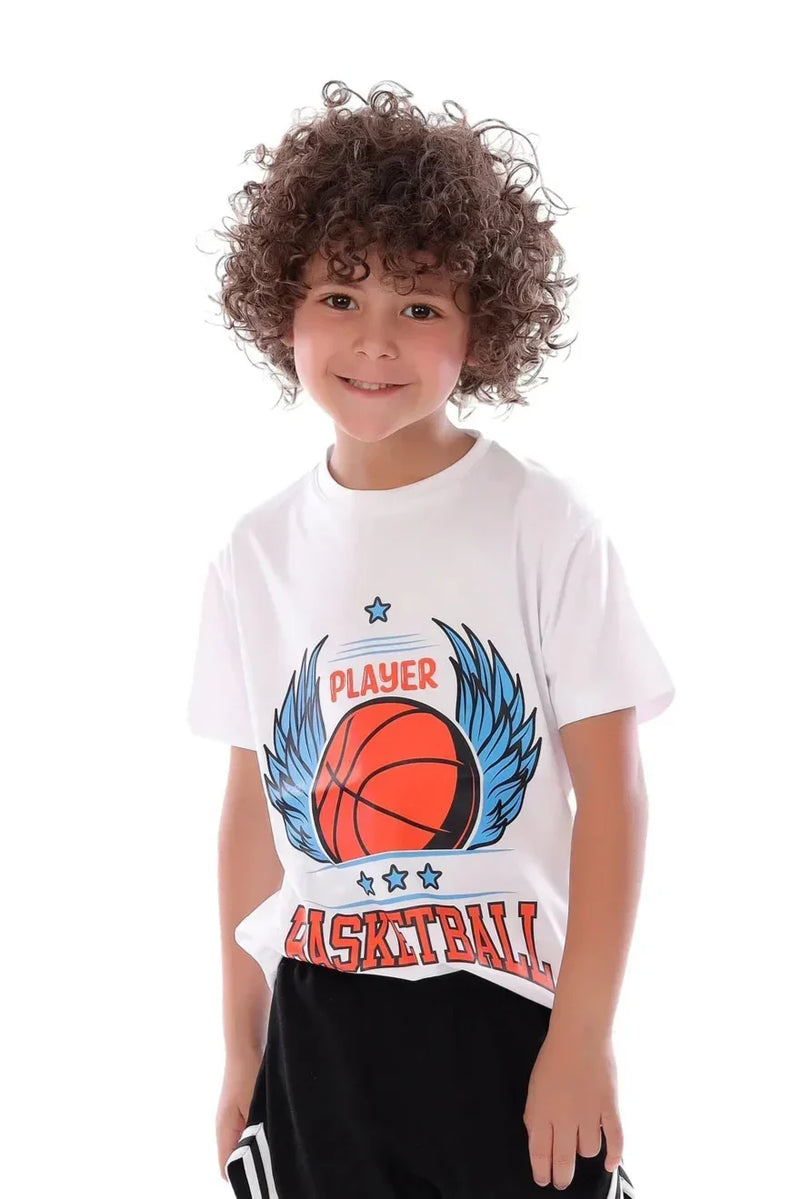
Stationary dribbling, low and high, thirty seconds each hand; figure-of-eight dribbles around the legs; defensive slides between two markers; and jump-and-land practice landing softly on two feet with bent knees. A ball indoors is a household negotiation, so most of this works with a soft ball or outside on a balcony or in the building's entrance. A kit that moves properly helps here more than people expect - a Boys Basketball Kit in a jersey and shorts set is the practical version of what a child sees on a court.
Form Mistakes in Squats, Push-Ups, Planks and Burpees
Four exercises make up most of a child's home training, and each has one mistake that accounts for nearly all the bad repetitions.
- Squats - knees collapsing inward. Cue: push the knees out over the middle of the foot. Heels stay on the floor; if they lift, the child is squatting too deep for their current range.
- Push-ups - hips sagging. The body should move as one line. Drop to the knees rather than let the hips drop, since a knee push-up done straight is worth more than a full one done bent.
- Planks - head hanging down and hips too high. Cue: look at the floor a hand's length in front, and imagine a straight line from the heels to the head. Twenty good seconds beats a minute of a raised-hip plank.
- Burpees - landing hard and flat-footed. Cue: land quietly. Noise on landing is the signal to slow the exercise down, and it is the single most useful correction in the whole routine.
The general rule for all four: stop at form breakdown, and say what to fix rather than that it was wrong. One cue per set is as much as a child can hold.
Adapting the Routine for Ramadan
For children who are fasting, the routine changes shape rather than stopping. Move every session to after iftar, leaving at least an hour after the meal, and keep the intensity light to moderate - this is not the month for personal bests. Two sessions a week instead of three is sensible, and the stretching and mobility day becomes the more valuable one.
Skip daytime sessions entirely, and skip anything that involves sustained hard breathing while fasting. For younger children who are not fasting, the practical change is the schedule rather than the training: evenings run later for the whole family, so an earlier afternoon session or a weekend-heavy week works better. Evening sessions also run cooler, which is the one advantage - a light layer such as Boys Track Pants is worth having for late sessions on a cool balcony, taken off once they have warmed up.
What Kids Should Wear for Home Exercise
Home training gets treated as the one place clothing doesn't matter, which is why it's the most common place for a session to go badly. Loose pyjama bottoms catch underfoot during jumps; a cotton t-shirt is soaked and heavy ten minutes into a circuit; a top that rides up on every overhead reach turns into a distraction the child spends the session managing.
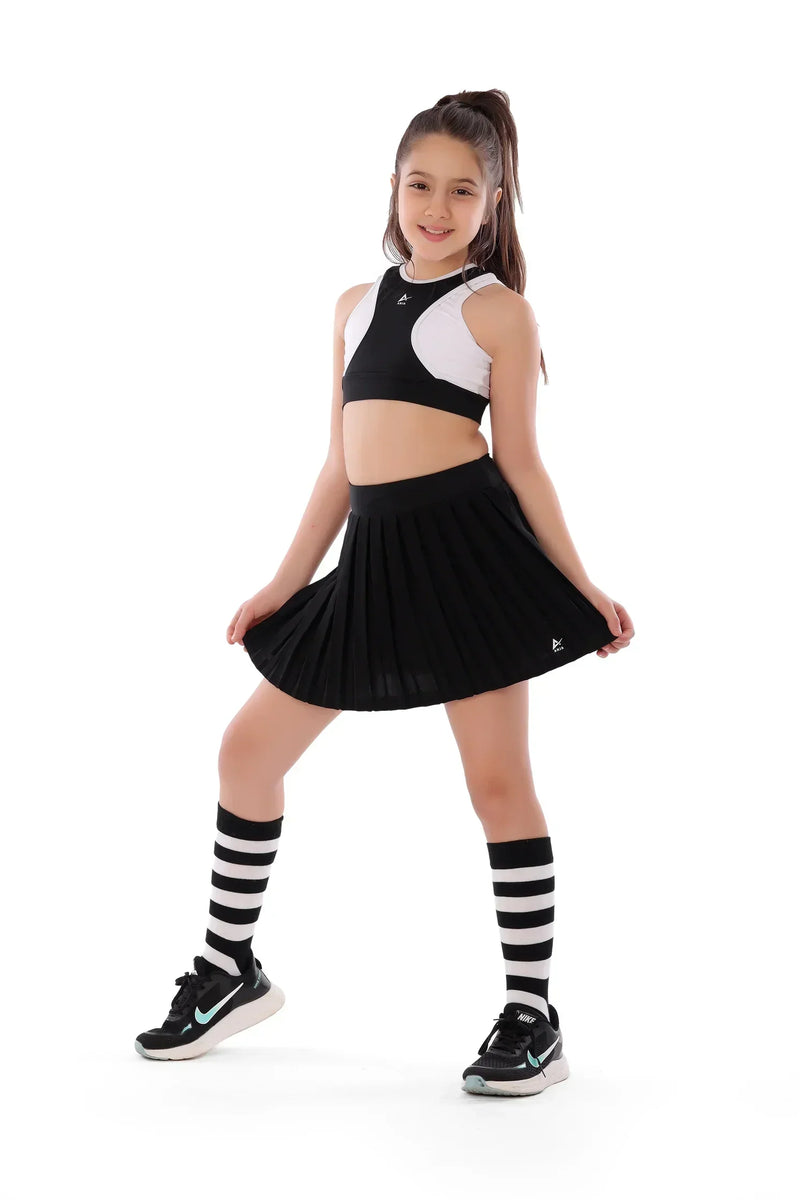
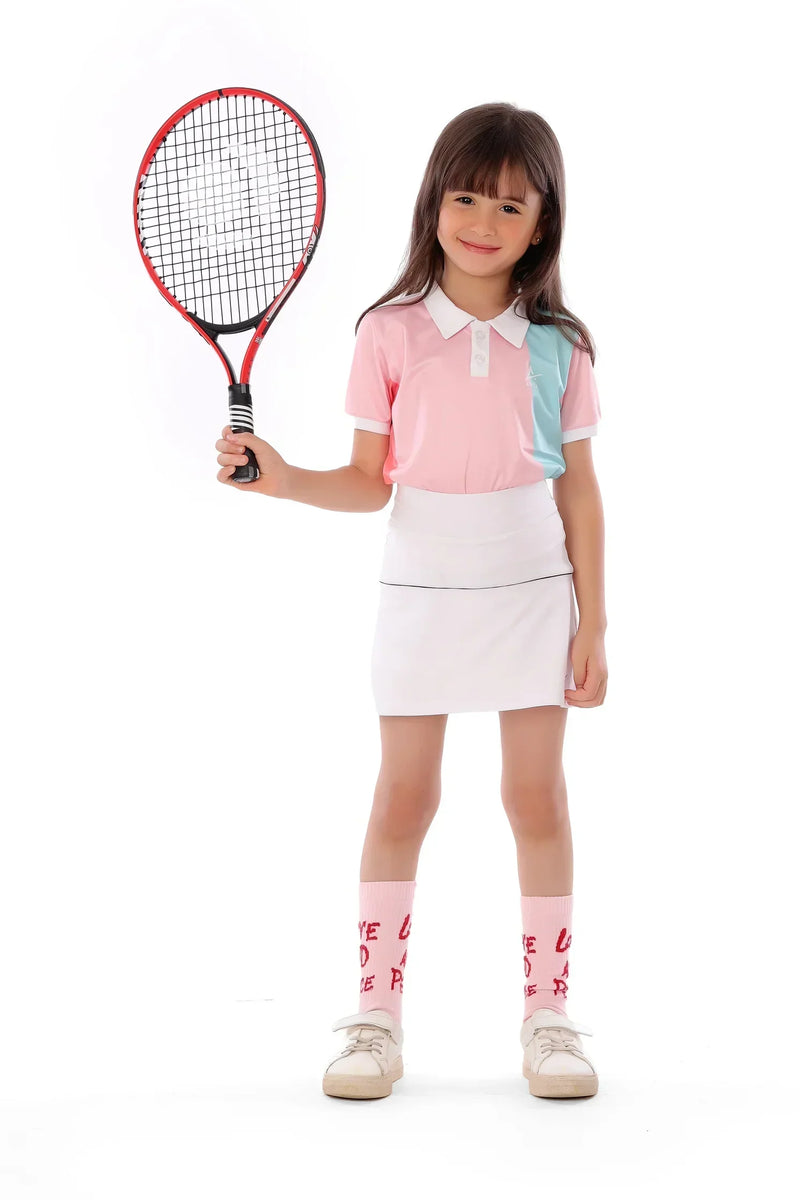
What works is ordinary training kit: a breathable top from the sports t-shirts range, and bottoms that stay put - high-waist leggings for floor work and stretching, or performance shorts for jumping and running drills. For stretching and mobility days, comfort matters more than performance fabric, so a cotton blend is fine there.
Matching Kit to the Session Type
| Session | Top | Bottom |
|---|---|---|
| Circuit / cardio | Moisture-wicking short sleeve | Shorts or fitted leggings |
| Sport drills | Training jersey or tee | Sport-specific shorts |
| Stretching / mobility | Cotton blend tee | Leggings or joggers |
| Winter indoor sessions | Long sleeve or quarter-zip | Joggers, layer removed once warm |
The full ranges sit in boys' sportswear and girls' sportswear, with the training-focused pieces in the gym and training collection.
Keeping a Child Motivated Past Week Three
Week three is where home routines die. The things that get past it are small: a simple chart of completed sessions, letting the child choose one exercise in each circuit, doing the session alongside them rather than supervising it, and tying it to something they want - being faster at football, holding a handstand, keeping up in PE. Progress a child can see beats a schedule they're told to follow.
Tracking Progress Without Turning It Into Pressure
Children lose interest in a routine that has no visible result, and they lose interest faster in one that has become a test. The line between the two is what gets measured.
Track things the child can beat without competing with anyone: seconds held in a plank, repetitions of a squat with good form, how many toe taps in thirty seconds, whether they can now touch their toes. Write them on the same simple sheet once a fortnight rather than every session, so the change is big enough to see. What not to track: weight, body measurements, and any comparison to a sibling or a classmate - none of them measure what the routine is for, and all of them turn a habit into a judgement.
The best progress marker is not on a chart at all. It is the child noticing on their own that they are not out of breath at the end of a PE lesson any more.
Frequently Asked Questions
How long should a child's home exercise session be?
10-15 minutes for ages 4-6, 15-20 minutes for 7-9, and 20-30 minutes for 10-14. Shorter and more consistent beats longer and occasional.
How many days a week should kids exercise at home?
Three structured sessions plus one light stretching day, with at least one full rest day. That fits alongside a club session and school PE without overloading a growing body.
Can children do push-ups and squats safely?
Yes - bodyweight exercises are safe and useful from around age seven, provided form comes before repetition count. External weights should wait until after puberty.
Does it matter what a child wears for exercising at home?
More than people expect. Loose pyjama bottoms catch during jumps and cotton tops get heavy with sweat, both of which cut sessions short. Ordinary breathable training kit solves it.
What if my child misses a week?
Restart at the next scheduled session rather than trying to make up what was missed. Attempting to catch up is the most common reason routines are abandoned entirely.
What does a ten-minute version of the session look like?
Two rounds of thirty seconds of star jumps, ten squats, a twenty-second plank and ten high knees each side, after a minute of marching. Use it to replace a full session on a busy day, not to shorten every session.
How should a child warm up before exercising at home?
Three minutes, thirty seconds each: marching with high knees, arm circles both directions, shoulder rolls, ten slow half-depth squats, leg swings, and light jogging on the spot. Save static stretching for the cool-down.
Can children train during Ramadan?
Fasting children should train after iftar, at least an hour after eating, at light to moderate intensity and twice a week rather than three times. No daytime sessions while fasting.
Shop Training Kit for Kids at Anja
Anja's boys' and girls' ranges cover breathable training tops and bottoms for home sessions, with the full training selection in the gym and training collection.