Boys' activewear fails in a predictable way. It does not wear out evenly — it goes at the knees, at the shorts hem and at the seat, because Egyptian boys play on concrete, tiled school yards and hard-packed dirt far more often than on grass. Buying a boy's kit well means buying for that specific kind of abrasion, in a climate that spends five months above 33°C, on a body that may grow 8cm during the year you own the clothes.
This guide covers sizing, fabric, the durability points that decide whether a piece lasts a season or a school year, and what to buy for the activities that dominate boys' sport in Egypt: football, basketball, swimming and school PE. The examples come from the Anja boys sportswear range, but the logic applies wherever you buy.
Egyptian Heat and Hard Surfaces: The Two Constraints That Decide Everything
The first constraint is heat. From late April through October, afternoon training happens in 33-38°C with strong direct sun and low humidity outside the coastal cities. Low humidity is actually an advantage: sweat evaporates fast if the fabric lets it reach the surface. That single fact is why fabric choice matters more in Egypt than in a humid climate — a good performance knit genuinely cools, and a cotton shirt genuinely does not.
The second constraint is the playing surface. Very little of the football and basketball played by Egyptian boys happens on grass or sprung wooden floors. It happens on asphalt, interlock tiles, and dirt. That means abrasion on the knees and the hem, and it means the seam construction matters as much as the fabric weight.
Where Boys' Activewear Actually Wears Through
Check these four points on anything you are considering, because they are where the piece will fail:
- Knees on long pants — thin single-layer knit goes within a season of concrete football.
- The inside thigh seam on shorts and joggers, where the fabric rubs against itself while running.
- The hem of shorts, which frays first if it is a single-turn stitch rather than a double.
- The neckline and shoulder seam on t-shirts, which stretch out from being pulled on and off quickly.
None of this is visible in a product photo, so it is worth handling the garment and pulling gently at the seam before committing to more than one piece.
Boys' Sizing: Measure Height, Ignore the Age Label
Age-based sizing is unreliable for boys specifically because the growth spurt is late and sudden. A boy can be small for his age at ten and the tallest in his class at twelve. Measure standing height against a wall without shoes, and measure the waist, because boys' waist-to-height ratio varies far more than girls' at the same age.
| Size | Height (cm) | Typical age | Chest (cm) | Waist (cm) |
|---|---|---|---|---|
| XS | 110-120 | 5-6 | 56-60 | 53-56 |
| S | 120-130 | 7-8 | 60-64 | 56-59 |
| M | 130-140 | 9-10 | 64-70 | 59-63 |
| L | 140-152 | 11-12 | 70-76 | 63-68 |
| XL | 152-165 | 13-14 | 76-84 | 68-74 |
When to Size Up and When Not To
Size up on tops, hoodies and track pants — a slightly loose fit on those is normal and gives you a second season. Do not size up on shorts, compression base layers or swim shorts: loose shorts slide down while running and a loose base layer stops compressing, which is the only reason to own one. For football shorts in particular, a size too large means he spends the match holding the waistband.
Performance T-Shirts Versus Cotton Tees for Training
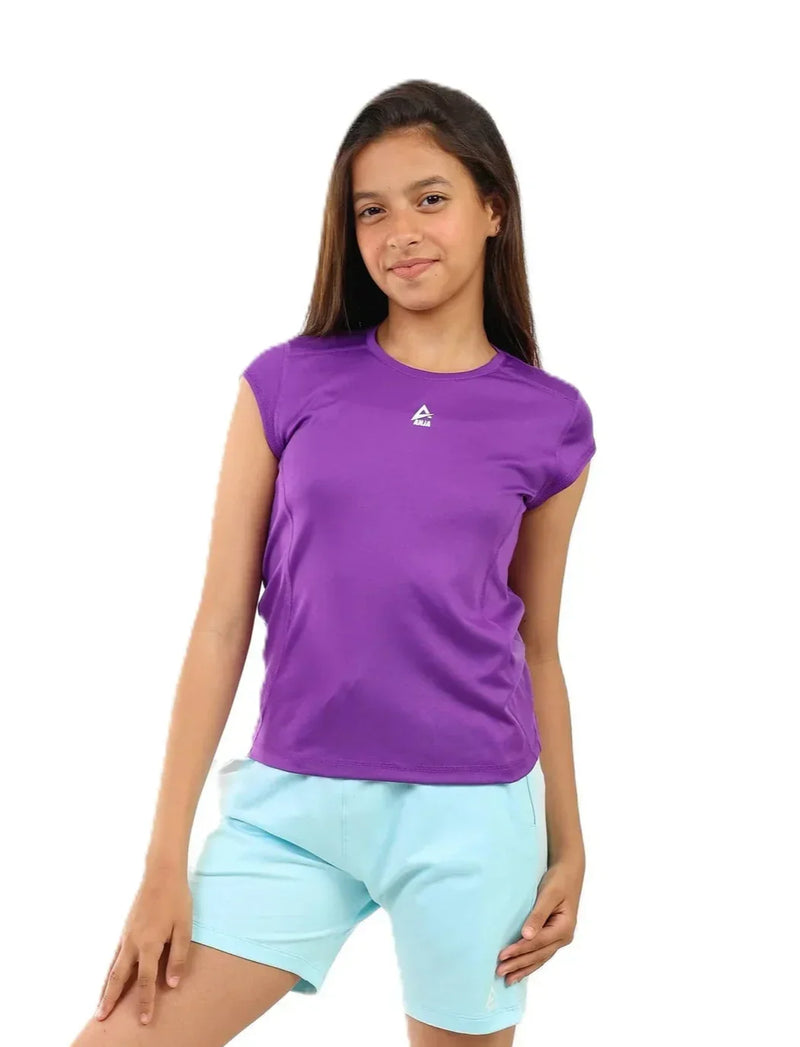
A cotton t-shirt is the default purchase and the wrong one for training. It absorbs sweat and holds it, gets heavy, clings, and stays damp for hours — which in an air-conditioned school corridor after PE is how boys end up cold in a 30°C country. A short-sleeve performance t-shirt moves sweat to the surface, dries between a morning and afternoon session, and keeps its shape through frequent washing.
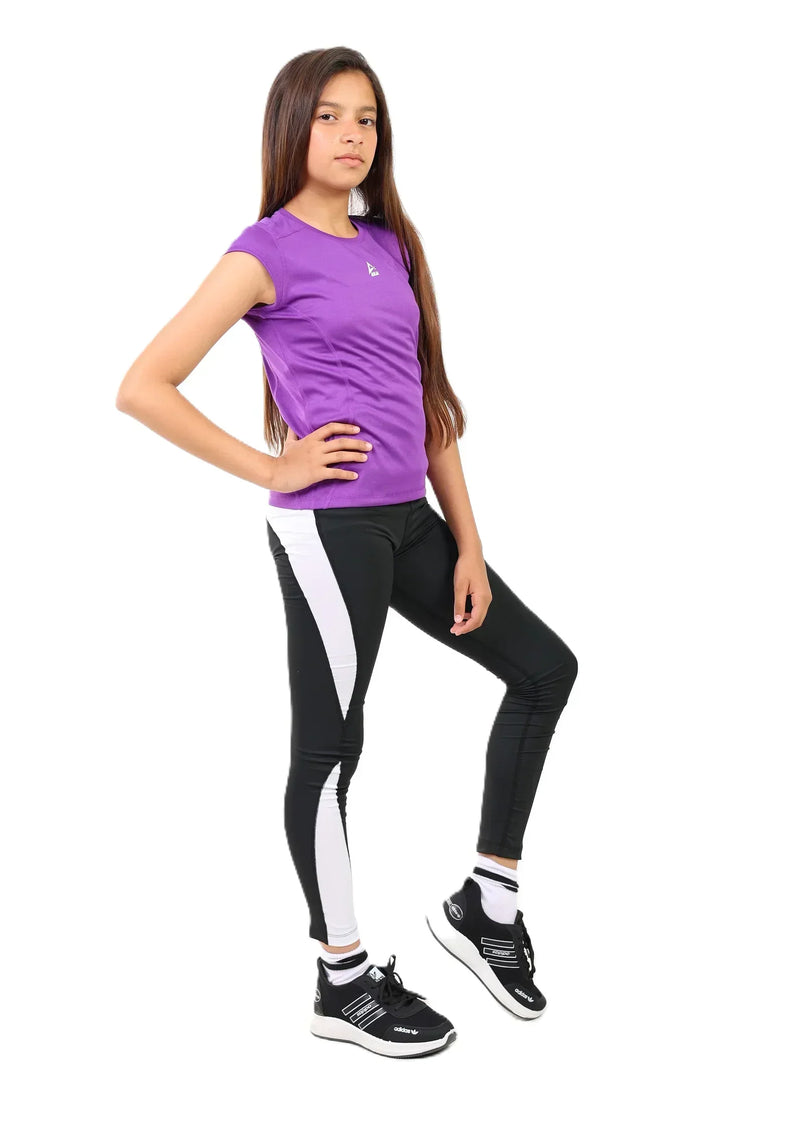
Keep cotton for the walk to the club and for after the session. For anything worn during activity, the whole boys tops range is built on performance knit for this reason. Practically, three performance tees cover a boy training three or four times a week; two is enough for school PE only.
Sleeveless Jerseys, Polos and When Each One Fits
Sleeveless is the coolest option and is the standard for basketball, but many Egyptian schools will not allow it in PE, so it is a club purchase rather than a school one. A sport polo sits in the opposite position: it is usually accepted where a t-shirt is required and looks tidy enough for school events, but the collar and placket make it slightly warmer. Long sleeve in performance knit is not a winter-only item — it is also the sun-protection option for boys who train at midday outdoors.
Shorts, Joggers and Track Pants: Getting the Bottoms Right
Bottoms take the most abuse and are the most common repeat purchase. The decision is mostly about length and waistband.
Short Versus Knee-Length Shorts for Football
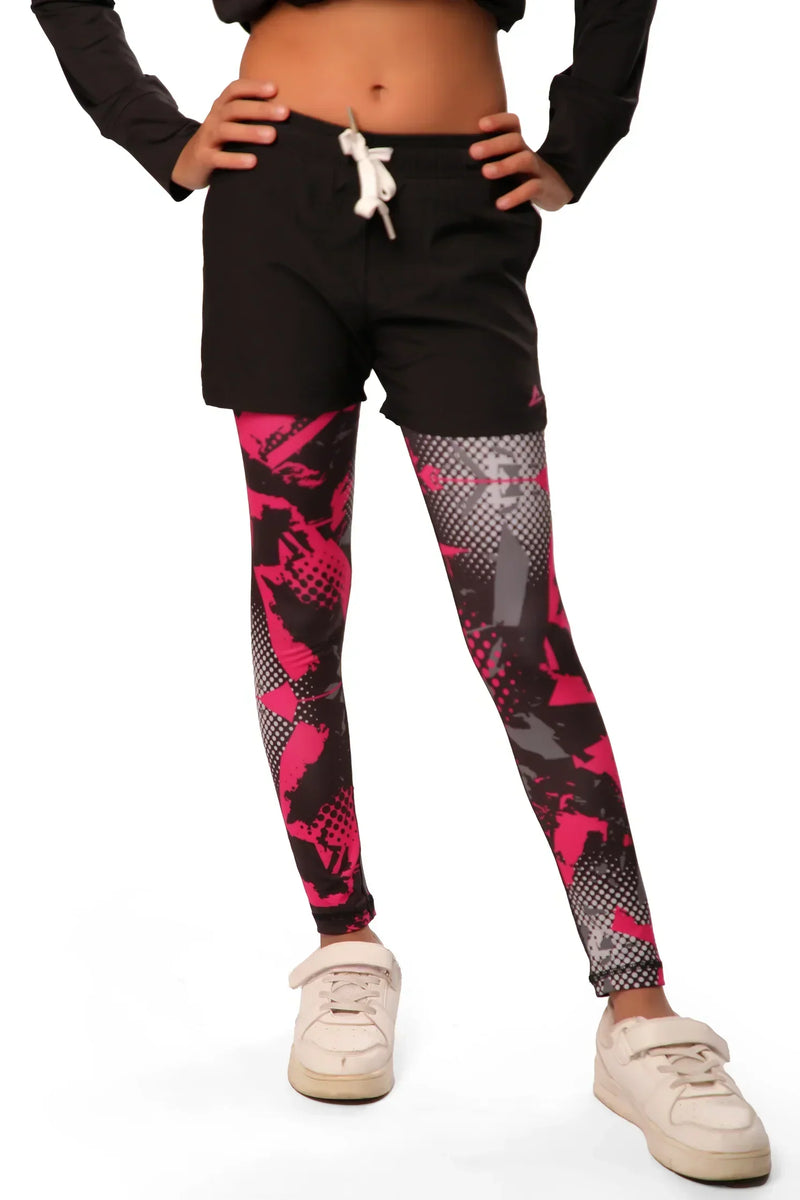
Standard athletic shorts sit mid-thigh and are cooler; knee-length shorts cover the knee during slides and falls on hard ground, which matters on asphalt. Most boys who play regularly on concrete are better off with knee-length as the main pair and a shorter pair for hot indoor sessions. Striped athletic shorts are the general-purpose option; the longer cut in the boys bottoms collection is the hard-surface option.
Drawstring Waists Against Elastic-Only Waists
Elastic-only waistbands are the main reason shorts get abandoned: they stretch out after a month and then will not stay up, and there is nothing you can do about it. A drawstring inside the elastic means the same shorts still fit after the elastic relaxes and after a growth spurt. It is a small detail that roughly doubles the useful life of a pair. Drawstring track pants apply the same logic to long bottoms.
Zipper-Hem Joggers for Boys Who Wear Football Boots
If he trains in boots or high-top shoes, a plain elasticated cuff is a daily fight. A zipper at the hem lets the leg open wide enough to pass over the shoe, which sounds trivial until you have watched a ten-year-old try to get joggers off over cleats on a club bench.
Football, Basketball and Swimming: What Each Sport Actually Needs
Boys' sport in Egypt concentrates heavily in a few activities, and the kit requirements diverge more than parents expect.
| Sport | Top | Bottom | Extra | Replace |
|---|---|---|---|---|
| Football | Performance tee, short sleeve | Knee-length shorts | Long socks, shin guards | Shorts twice a year |
| Basketball | Sleeveless jersey | Loose basketball shorts | Compression base layer | Jersey yearly |
| Swimming | None | Swim shorts, fitted | Goggles, quick-dry towel | Every 6-9 months |
| School PE | Performance tee in school colour | Shorts or track pants | Hoodie for winter | Each school year |
| Gym and fitness | Performance tee or long sleeve | Joggers or shorts | Quarter-zip layer | Yearly |
Basketball Kits: Buying the Jersey and Shorts Together
Basketball is the one sport where buying a matched set is genuinely better value than assembling pieces, because the jersey and shorts are cut to be worn together and a mismatched pair looks obviously wrong at club level. A sleeveless jersey and shorts kit covers it in one purchase. Add a fitted base layer underneath if he plays outdoors in winter mornings.
Swim Shorts for Pools, the North Coast and the Red Sea
Egyptian families use swim shorts in three different settings, and pool rules are the strictest — many club pools require fitted swim shorts rather than loose board shorts. Kids swim shorts in a quick-dry fabric cover pool and beach use. The thing that shortens their life is not swimming but leaving them wet in a closed bag, which destroys the elastic faster than chlorine does.
Layering for Cairo Winter Training and Air-Conditioned Halls
Egyptian winter creates a specific problem: a 9°C morning, a 22°C afternoon, and indoor halls cooled hard enough that a sweating boy gets cold within minutes of stopping. One thick sweatshirt handles none of this well. Three thin layers handle all of it.
- Base: performance long sleeve or short sleeve next to the skin, never cotton.
- Mid: a quarter-zip performance top — the zip regulates temperature without removing the layer.
- Outer: hoodie or zip-up sweatshirt for arrival and the wait after, off during the session.
- Bottoms: track pants over shorts, removed once he is warm.
- Spare dry tee in the bag for after the session — the single most useful thing in a winter kit bag.
For a full outfit in one purchase, the boys active outfit sets pair a top and bottom already matched, which removes the guesswork on colour.
School PE Requirements and the September Buying Trap
Egyptian schools typically announce PE kit requirements in the first week of term, not before it. That timing pushes families into buying twice: once in August on a guess, and again in September on the actual requirement. The way out is to split the purchase. Buy the colour-neutral items in August — plain performance tees in white and black, black shorts, black track pants — which pass almost any school requirement. Wait on anything where the school might specify a colour, a logo or a specific length.
Also worth knowing before the year starts: most schools require closed sports shoes rather than sandals, many prohibit sleeveless tops in PE, and a surprising number now ask for a name label on the kit. None of these are expensive to satisfy if you know before you buy.
The Six-Item Boys Kit That Covers a Full Year
Buy in this order. Each step is complete on its own, so the list works as a budget ladder rather than a single purchase.
- Two performance t-shirts in neutral colours — the highest-use item by a wide margin.
- One pair of knee-length shorts with a drawstring waist.
- One pair of track pants or joggers, drawstring, zipper hem if he wears boots.
- One hoodie or quarter-zip for winter mornings and cold halls.
- Sport-specific item only if he has a fixed sport: a basketball kit, swim shorts, or a second pair of football shorts.
- A compression base layer last — useful but not necessary until he trains year-round.
Checklist Before You Pay
- Height measured in the last two months; waist measured for anything with a fitted waistband.
- Drawstring present inside every elasticated waistband.
- Knee area is either reinforced or the pants are for indoor use only.
- Shorts hem is double-stitched, not a single turn.
- Fabric is performance knit for anything worn during activity.
- Colour passes the school requirement, or is neutral enough to pass any of them.
- Two of anything worn more than twice a week, so washing never blocks a session.
Washing Boys Activewear Without Destroying the Fabric
Performance fabric is killed by three things: fabric softener, hot water and tumble drying. Softener coats the fibres and cancels the moisture-moving property you paid extra for, so after a few washes the shirt behaves like cotton. Heat breaks the elastane that lets waistbands recover.
Wash cold, inside out, no softener, and dry in shade rather than full Egyptian sun, which fades colour and weakens elastic. Deal with sweat smell by soaking in cold water with a little vinegar before washing rather than by adding more detergent — detergent build-up is itself a common cause of persistent smell in synthetic activewear. Rinse anything that has been in chlorine or seawater before it joins the normal wash.
Frequently Asked Questions
What size sportswear should I buy for a 10-year-old boy in Egypt?
Measure his standing height without shoes rather than going by age. 130-140cm is size M in Anja's chart, which is typical for 9-10 years, but boys of the same age vary widely. Measure the waist too, since boys' waist size varies more than their height at any given age.
Are knee-length shorts better than short athletic shorts for boys?
On hard surfaces, yes. Most football and basketball in Egypt is played on asphalt or tiles, and knee-length shorts protect the knee during slides and falls. Shorter shorts are cooler and better for indoor sessions, so many boys end up owning one pair of each.
Can boys wear cotton t-shirts for training in hot weather?
Not ideally. Cotton absorbs sweat and holds it against the skin, gets heavy, and stays damp for hours. Performance knit moves sweat to the surface where Egypt's dry air evaporates it quickly. Keep cotton for before and after training, not during.
How many sets of sportswear does a boy need for club training?
For three to five sessions a week, plan on three performance tops and two to three bottoms so that washing never leaves him without clean kit. School PE once or twice a week needs only two tops and two bottoms.
Why do my son's shorts stop staying up after a month?
Because the waistband is elastic only. Elastic relaxes with repeated stretching and washing, and once it does, nothing restores it. Buy shorts and joggers with a drawstring inside the elastic so the fit is adjustable after the elastic softens and through a growth spurt.